
Matt Bergevin
IT Program manager
Chose Pulseway
I haven't looked at competitors.

| Product | Rating | Most Used By | Product Summary | Starting Price |
|---|---|---|---|---|
 Pulseway | Mid-Size Companies (51-1,000 employees) | Pulseway is an IT monitoring and management solution that enables users to monitor, manage and control all systems and servers from a smartphone, tablet or browser. For system administrators, Pulseway sends a notification, so they can see an issue and sort it in seconds. Pulseway features: Automation: Auto-remediation workflows, so that IT issues are fixed before users even notice them. Mobile Access: Customers can monitor, manage, connect with… | $0.80 per month per installation | |
 Zabbix | N/A | Zabbix is an open-source network performance monitoring software. It includes prebuilt official and community-developed templates for integrating with networks, applications, and endpoints, and can automate some monitoring processes. | N/A |
| Pulseway | Zabbix | |||||||||||||||
|---|---|---|---|---|---|---|---|---|---|---|---|---|---|---|---|---|
| Editions & Modules |
| No answers on this topic | ||||||||||||||
| Offerings |
| |||||||||||||||
| Entry-level Setup Fee | No setup fee | No setup fee | ||||||||||||||
| Additional Details | No hidden fees or contracts. Term-based discounts. | — | ||||||||||||||
| More Pricing Information | ||||||||||||||||
| Pulseway | Zabbix | |
|---|---|---|
| Considered Both Products |  Pulseway Matt Bergevin IT Program manager Chose Pulseway I haven't looked at competitors.  Brian Cook Information Security Officer Chose Pulseway The 2 major factors were: 1. The fact there was no contract, we believe vendors should have to validate the usefulness of their product and their support to their customers every day, not just 1 or 2 months every few years. This is the same reason we allow our clients to leave …  Brian Heersink IT Director Chose Pulseway Pulseway has the most features, the best looking app with the best design and better usability than any others we evaluated. We liked the uniformity of the app design across all platforms (Windows, Android, Apple) and the notifications displayed on each platform. The price was …  Kenneth Hess Senior Systems Analyst Chose Pulseway I haven't used any competitive products to Pulseway because I haven't found any that truly compare. Once I found Pulseway, I've used nothing else.  Phillip Hare Pastor Chose Pulseway It's not a perfect service - disconnects from clients and I have to use ScreenConnect to reconnect to them.  Chris Short Director of IT Chose Pulseway Pulseway is by far the easiest to set up. The dashboard is very straight forward and has very little need for custom configuration. We use Pulseway to review basic server information and compare it to other similar servers to track outliers. It is very easy to see resources, … | Zabbix  Osman Gani Project Coordinator Chose Zabbix SolarWinds IP Address Manager (IPAM) and SolarWinds Network Device Monitor  Umair Mehboob Senior Devops Engineer Chose Zabbix Zabbix is very easy to configure and this tool provides a more active alert system. We have evaluated ipMonitor and CloudWatch but the scope for sending alerts is very limited and this tool is very efficient in sending alerts through emails, MS Teams, and even on SMS. We are …  Faustine Chisasa Network Engineer Chose Zabbix Zabbix is more flexible, highly customizable and low on resource usage.  Thomas Higgins Infrastructure Engineer Chose Zabbix Most of the SolarWinds are separated out, whereas Zabbix includes templates and capabilities for all of them out of the box. Other solutions listed include most or all of them to varying degrees as well. New Relic is more for Application Monitoring, but the New Relic …  Ricardo Melo Network Analyst Chose Zabbix Zabbix was adopted in our framework due to the value, the hardware requirements, the knowledge we had available and the vast documentation on the internet. Chose Zabbix Zabbix was much better at handling traditional systems, and in ease of customization, both in the system itself, and customizing data sources, such as adding deep MySQL or JMX integrations. It's very good for organizing large-scale (hundreds or thousands of servers) systems; …  Eric O'Callaghan Linux Engineer Chose Zabbix I personally prefer Zabbix over any other monitoring software that I have ever tried. Zabbix is so customizable that if there is a feature I need, I can easily implement it. I can then add that feature to a template in no time and have it applied to hundreds, or even thousands, …  Josh Quint Lead AWS Systems Architect Chose Zabbix More extensive and customizable than SaaS solutions. Much less learning curve than Nagios. Cost is very much lower than SaaS monitoring especially at scales over 1000 hosts ($15,000/month for SaaS!!) Templating systems allows for easy management and monitoring of groups of …  Nishanthi Mohan DevOps Engineer Chose Zabbix Zabbix is cost effective maybe and certainly a good tool but not the best. The other ones have features that Zabbix is missing and we use couple of them.  Deepshikha Gandhi DevOps Engineer Chose Zabbix Nagios has some advantages over Zabbix like "flapping" detection and multiple alert levels - Error, Warning and OK. However, the disadvantages of Nagios like needing an addon (NRPE) to monitor remote system internals (open files, running processes, memory, etc), no charting of …  Nadir Wade Linux Administrator Chose Zabbix Nagios will always be at or near the top, but I really like how sleek Zabbix is. Also, once it's up and running its really helps keep things in order for you and your customers. As for PandoraFMS, it would have beat out Zabbix, but the documentation on PandoraFMS is really … |
| Pulseway | Zabbix | |
|---|---|---|
| Small Businesses |  NinjaOne Score 9.0 out of 10 |  Veeam ONE Score 8.2 out of 10 |
| Medium-sized Companies |  Intermapper Score 8.4 out of 10 |  Icinga Score 7.8 out of 10 |
| Enterprises |  Cisco Meraki Dashboard Score 9.3 out of 10 |  ScienceLogic SL1 Score 8.9 out of 10 |
| All Alternatives | View all alternatives | View all alternatives |
| Pulseway | Zabbix | |
|---|---|---|
| Likelihood to Recommend | 8.0 (0 ratings) | 8.3 (0 ratings) |
| Likelihood to Renew | - (0 ratings) | 9.0 (0 ratings) |
| Usability | 10.0 (0 ratings) | 8.6 (0 ratings) |
| Support Rating | 9.6 (0 ratings) | 5.0 (0 ratings) |
| Implementation Rating | - (0 ratings) | 8.0 (0 ratings) |
| Pulseway | Zabbix | |
|---|---|---|
| Likelihood to Recommend |
|
|
| Pros |
|
Eric O'Callaghan Linux Engineer |
| Cons |
Phillip Hare Pastor |
 Asad Khan Technical CARE Specialist |
| Likelihood to Renew | No answers on this topic |
Thomas Higgins Infrastructure Engineer |
| Usability |
|
Osman Gani Project Coordinator |
| Support Rating |
|
|
| Implementation Rating | No answers on this topic |
Thomas Higgins Infrastructure Engineer |
| Alternatives Considered |
Brian Cook Information Security Officer |
|
| Return on Investment |
Kenneth Hess Senior Systems Analyst |
|
| ScreenShots | Pulseway Screenshots  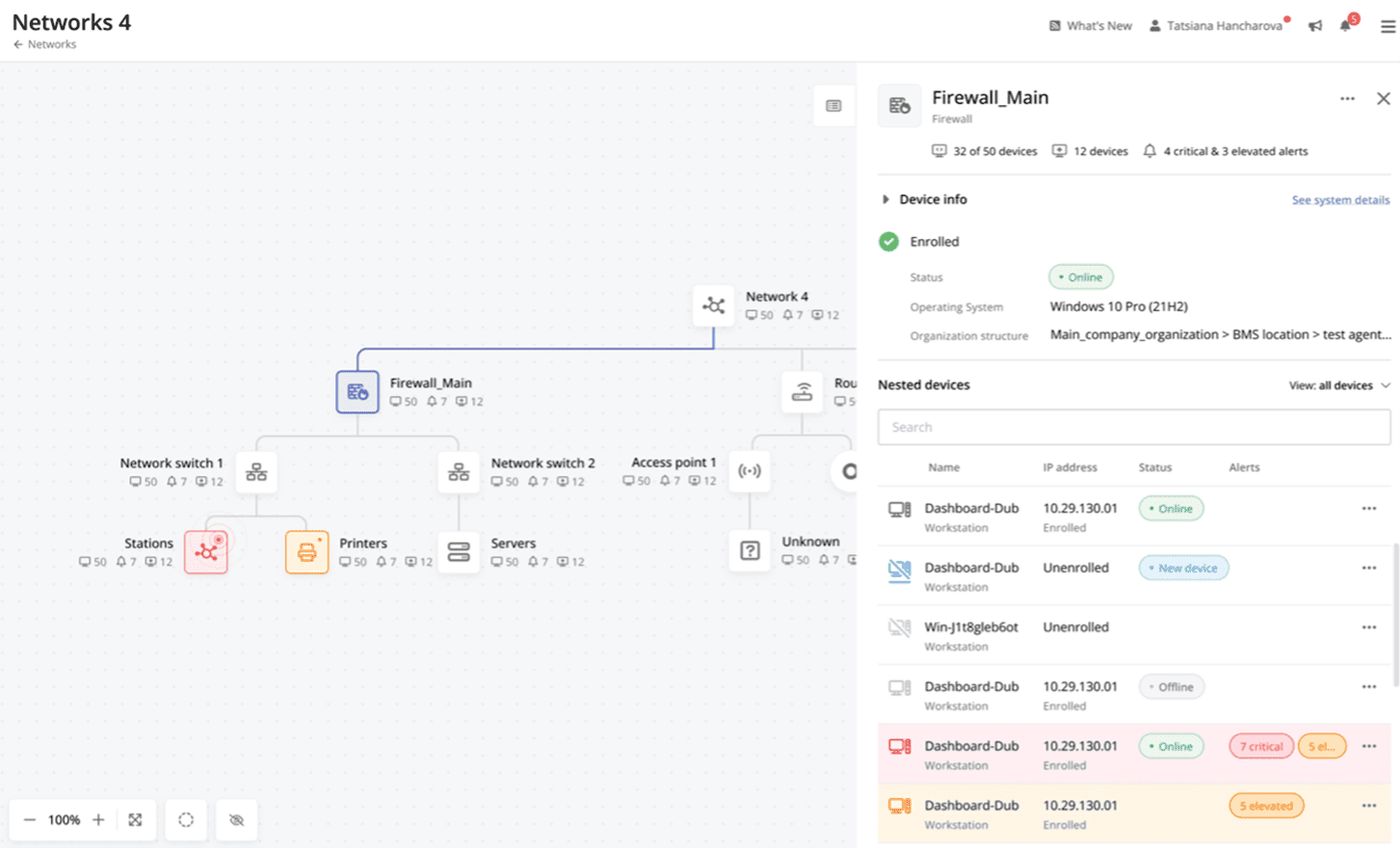 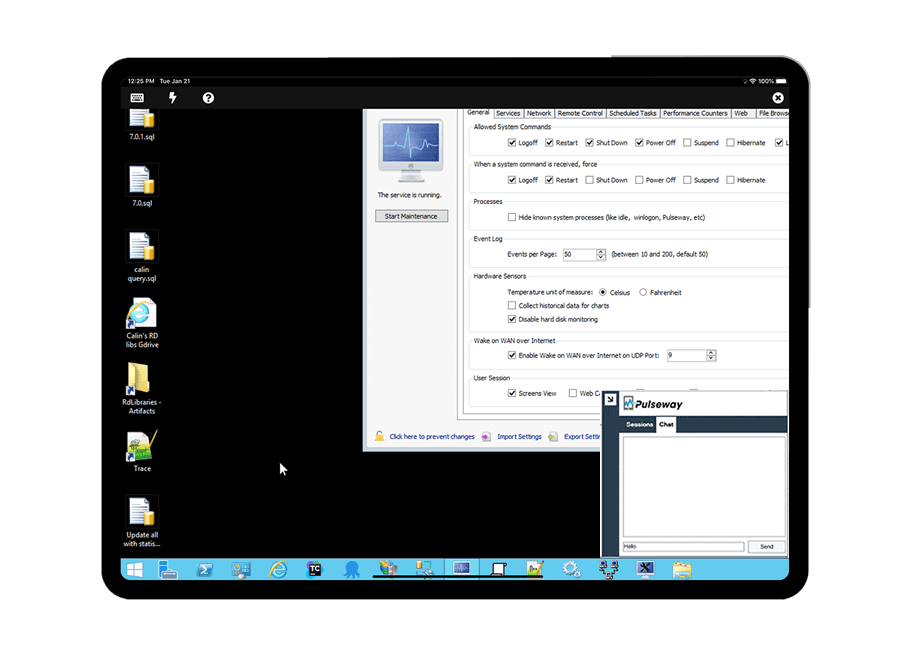   |
