ReCharge, the eponymous subscription management software solution from ReCharge Payments headquartered in Santa Monica, is said by the vendor to have helped over 15,000 merchants launch and scale their subscription business. Be it a curated monthly box, recurring necessities or access to exclusive perks, they state ReCharge drives billions of dollars in annual processing for nearly 30 million consumers.
N/A
Salesforce Revenue Cloud
Score 8.8 out of 10
Mid-Size Companies (51-1,000 employees)
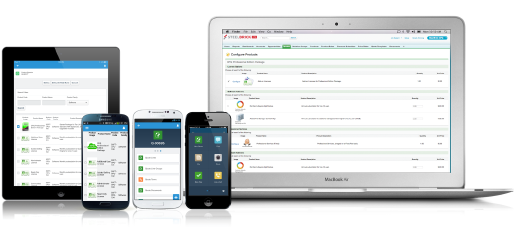
Salesforce Revenue Cloud (formerly Salesforce CPQ or SteelBrick) is built and delivered on the Salesforce Platform and Salesforce1 Mobile App which enables users to create accurate sales quotes quickly and submit error-free orders on the fly from any device.
$30
Per User per Month
Pricing
Recharge
Salesforce Revenue Cloud
Editions & Modules
No answers on this topic
Basic
$30
Per User per Month
Professional
$50
Per User per Month
Enterprise
$75
Per User per Month
Offerings
Pricing Offerings
Recharge
Salesforce Revenue Cloud
Free Trial
No
Yes
Free/Freemium Version
No
No
Premium Consulting/Integration Services
No
No
Entry-level Setup Fee
No setup fee
Optional
Additional Details
—
—
More Pricing Information
Community Pulse
Recharge
Salesforce Revenue Cloud
Considered Both Products
Recharge
Verified User
Anonymous
Chose Recharge
Recharge has been in use for a long time at this brand, before a lot of the emerging competition has sprung up. Whenever I research or use a different piece of subscription software, Recharge feels old and stagnate to me. It doesn't feel like they're keeping up with changes in …
We actually surveyed over a dozen potential Shopify subscription apps before we finally decided to settle on Recharge. Recharge is definitely not the cheapest, but they also weren't the most expensive, either. For the all of the features and technology they offer versus what …
This software is so complex we can say that Salesforce works so much better in the interface. Also, the features provided by Salesforce are far better than this software. It also includes Storing data, API development, and so many other functionalities which help a developer …
This has better product capabilities like Manage Order, Mobile, pricing module, select product offers service channel. What I like best is the integration with Salesforce, the ability to create and connect opportunities and there is a lot of flexibility in this tool. It has a …
There is no comparison to a fully functional instance of CPQ. Nothing comes close due to the amount of customization and ease of use that CPQ offers once it's fully built out. Other solutions may be easier to build or administer, but for the users and business needs, CPQ is the …
SalesForce Revenue Cloud has been leaps and bounds ahead of the softwares I used to use! I had used Google Sheets at first (since it was free), then bought Excel briefly thinking that would suffice as a good CRM layout. Turns out I was wrong and needed something more. Revenue …
This program is just more advanced and customizable. It worked for our diverse team needs considering the size and complexity of our portfolio. This was just the right choice for us. The other CRM's were great for smaller-scale enterprises at the time that I used them.
Salesforce CPQ [(formerly SteelBrick)] seamlessly integrates with Salesforce allowing us to have less integrations to manage. Releases don't break a connection causing delays in the sales process.
Salesforce stacks well in terms of features like lead, quote and pricing management than other software like Zoho, bichon, agile or Hubspot, personally I believe if the entire set of tools and solutions provided by Salesforce are employed they would work like a well-oiled …
Salesforces CPQ compares very highly to Apparound CPQ, because of the integration with the Salesforce platform. Because of the integration with the regular Salesforce platform, the tools work interchangeably with one another. This process creates a great deal of efficiency, and …
CPQ is a more inline, integrated and user-friendly product compared to Apttus's offering. The fact that it was bought and embedded by Salesforce into the platform and the support that entails, was the big differentiator for us.
It is a strong offering if your a Salesforce customer. We previously used Panda Doc and the integration with Saleforce was just not robust enough as we've expanded. Panda Doc allowed for much more customization and control of templates. However, the pricing rules, …
It was not my choice to move to Salesforce CPQ. Our organization chose to move to this platform because Octiv gave the reps too much flexibility. They wanted to tighten the reins. Everyone hates Salesforce CPQ and the guy who implemented it isn't even at the company anymore.
We looked into using BigMachines and FPX but decided to implement Apttus many years ago. The Apttus implementation never went live after several hiccups along the way and we shifted our focus to Salesforce CPQ which has had it's moments as well. Overall, Salesforce CPQ is the …
Almost a no brainer as we already heavily use SalesForce. This process allowed for everything to be in one place. As stated before, it is better than our old solution because it pulls a lot of the info from the option for you, allows for you to cross-function with services …
CPQ is much more intuitive and user-friendly than JDE. JDE is clunky and was not native to the Oracle CRM tool, which created problems when it came to quote creation and consistency in how deals are moved through the pipeline. We chose CPQ because we were already using SFDC as …
Recharge's entry level subscription plans are cheap, allowing small brands to spin up a subscription program and get started. But at scale, Recharge gets expensive compared to much of the competition and runs into many limitations around subscription acquisition, management, and retention. We run into regular bugs and issues that are time consuming to fix. In my opinion, much of Recharge's functionality updates are adding on new features that they charge you for even though much of the subscription related functionality is clunky, sluggish, and doesn't perform incredibly well.
CPQ is great if you can devote the time to it to make it perfect for your sales team. It requires a lot of time and energy to build it out and customize, but once that's done it is one of the most powerful tools you will have. Having an expert in CPQ is really helpful as well.
Salesforce CPQ is great for being able to quickly and easily build product bundles in an intuitive and visually appealing way.
The product catalog and ability to easily add fields to product records makes setting up products really simple and adds a lot of value to reporting within Salesforce.
Basic product and configuration rules are very easy to understand and set up.
Our Salesforce is very messy, which tells me it's not super easy to clean up.
I always have a really hard time removing a contacts from an account - it seems like you can't simply remove the relationship so we have lots of people named DO NOT CONTACT or things of that nature.
Sometimes when saving it doesn't seem like things actually save.
In my experience, Recharge is very slow loading, both for our customer facing dashboards and our internal dashboards. We regularly deal with customer complaints, having difficulty using their subscription management dashboard. Working in the Recharge admin dashboard is also slow and clunky. It can be a little bit of a battle to get stuff done and it's not uncommon for analytics dashboards to simply fail to load. All in all, working with Recharge is not an enjoyable experience for me.
In my experience, Recharge support is... quite poor. They are slow to respond and unhelpful. Even at a different brand I worked at with an Enterprise contract and guaranteed few hour response times, they would regularly take one to three days to get back to me, which is quite a bit longer than the Enterprise support response times. I've had to get into arguments with them multiple times about bugs before they would admit them to be bugs and fix them and their go to support is to usually blame Shopify. There was one time I accidentally sent an email to a different vendor asking about Recharge support, and the other vendor provided a more helpful response than Recharge support.
There have been some issues with multi-year pricing of certain products and services which we have been assured will be resolved but I guess are still underway, the support team apart from this has not been needed much and in the rare scenarios, it has been needed the resolutions of conflicts has been prompt and quick, so the overall support would have my high regards for being so helpful and customer-oriented so as to assure good performance of their toolset and customer satisfaction.
We actually surveyed over a dozen potential Shopify subscription apps before we finally decided to settle on Recharge. Recharge is definitely not the cheapest, but they also weren't the most expensive, either. For the all of the features and technology they offer versus what they are charging, we found it to be extremely fair (and now well worth the price).
This has better product capabilities like Manage Order, Mobile, pricing module, select product offers service channel. What I like best is the integration with Salesforce, the ability to create and connect opportunities and there is a lot of flexibility in this tool. It has a very user-friendly platform & navigation across pages is the best Also I like how fast I can create quotes. I also like how detailed you can get with reporting. Any possible metric we can think of can be tracked, measured, and integrated.
Easy access to reporting on closed-won, closed-lost, and open quotes.
Accuracy in data referenced in a quote - it's typically accurate as it is pulled directly from opportunity, looking up to associated subscription start/end dates, etc..
We lose valuable time in creating quotes ourselves. Quotes were requested and created through sales ops previously, sales did not have access to the excel templates used to generate quotes.