
Neha Pant
Account Manager- Existing Business
Chose Salesforce Revenue Cloud
Conga CPQ

| Product | Rating | Most Used By | Product Summary | Starting Price |
|---|---|---|---|---|
 Salesforce Revenue Cloud | Mid-Size Companies (51-1,000 employees) | Salesforce Revenue Cloud (formerly Salesforce CPQ or SteelBrick) is built and delivered on the Salesforce Platform and Salesforce1 Mobile App which enables users to create accurate sales quotes quickly and submit error-free orders on the fly from any device. | $30 Per User per Month | |
 WooCommerce Subscriptions | N/A | WooCommerce Subscriptions is a premium extension for WooCommerce which supports recurring payments and subscription-based services and products. | N/A |
| Salesforce Revenue Cloud | WooCommerce Subscriptions | |||||||||||||||
|---|---|---|---|---|---|---|---|---|---|---|---|---|---|---|---|---|
| Editions & Modules |
| No answers on this topic | ||||||||||||||
| Offerings |
| |||||||||||||||
| Entry-level Setup Fee | Optional | No setup fee | ||||||||||||||
| Additional Details | — | — | ||||||||||||||
| More Pricing Information | ||||||||||||||||
| Salesforce Revenue Cloud | WooCommerce Subscriptions | |
|---|---|---|
| Considered Both Products | Salesforce Revenue Cloud Neha Pant Account Manager- Existing Business Chose Salesforce Revenue Cloud Conga CPQ  Nathaniel Sintros Sales Operations Manager Chose Salesforce Revenue Cloud There is no comparison to a fully functional instance of CPQ. Nothing comes close due to the amount of customization and ease of use that CPQ offers once it's fully built out. Other solutions may be easier to build or administer, but for the users and business needs, CPQ is the …  Pranav Lal Enterprise Architect Chose Salesforce Revenue Cloud Salesforce CPQ was faster in performance and suited our needs. Its direct integration on the SFDC platform made it easier to implement. Chose Salesforce Revenue Cloud I haven't used PandaDoc, but a friend of mine uses it at their organization and recommended it.  Prashant Choudhary Business Development Manager Chose Salesforce Revenue Cloud Salesforce stacks well in terms of features like lead, quote and pricing management than other software like Zoho, bichon, agile or Hubspot, personally I believe if the entire set of tools and solutions provided by Salesforce are employed they would work like a well-oiled …  Jared Wacht Principal Salesforce Administrator Chose Salesforce Revenue Cloud CPQ is a more inline, integrated and user-friendly product compared to Apttus's offering. The fact that it was bought and embedded by Salesforce into the platform and the support that entails, was the big differentiator for us.  Lindsey Stevens Enterprise Account Executive Chose Salesforce Revenue Cloud It was not my choice to move to Salesforce CPQ. Our organization chose to move to this platform because Octiv gave the reps too much flexibility. They wanted to tighten the reins. Everyone hates Salesforce CPQ and the guy who implemented it isn't even at the company anymore.  Graham Power Account Executive Chose Salesforce Revenue Cloud i did not make this decision  Cameron Walker Senior Account Manager Chose Salesforce Revenue Cloud CPQ is much more intuitive and user-friendly than JDE. JDE is clunky and was not native to the Oracle CRM tool, which created problems when it came to quote creation and consistency in how deals are moved through the pipeline. We chose CPQ because we were already using SFDC as … |  WooCommerce Subscriptions  Kejda Gjermani Digital Publisher Chose WooCommerce Subscriptions It's just much better than simply using Stripe or other WordPress payment plugins that only rely on Stripe. We can incorporate non-Stripe supported payment gateways such as PayPal and Amazon Payments which support recurring payments. More options for the user means less … |
| Salesforce Revenue Cloud | WooCommerce Subscriptions | ||||||||||||||||||||||||||||||||||||
|---|---|---|---|---|---|---|---|---|---|---|---|---|---|---|---|---|---|---|---|---|---|---|---|---|---|---|---|---|---|---|---|---|---|---|---|---|---|
| CPQ |
|
| Salesforce Revenue Cloud | WooCommerce Subscriptions | |
|---|---|---|
| Small Businesses |  QuoteWerks Score 9.4 out of 10 |  2Checkout from Verifone Score 8.6 out of 10 |
| Medium-sized Companies | QuoteWerks Score 9.4 out of 10 |  Sage Intacct Score 8.6 out of 10 |
| Enterprises |  SAP Sales Cloud Score 8.3 out of 10 | Salesforce Revenue Cloud Score 8.8 out of 10 |
| All Alternatives | View all alternatives | View all alternatives |
| Salesforce Revenue Cloud | WooCommerce Subscriptions | |
|---|---|---|
| Likelihood to Recommend | 8.0 (0 ratings) | 7.7 (0 ratings) |
| Likelihood to Renew | 9.1 (0 ratings) | 10.0 (0 ratings) |
| Usability | 8.6 (0 ratings) | 8.9 (0 ratings) |
| Availability | 9.1 (0 ratings) | - (0 ratings) |
| Performance | 8.2 (0 ratings) | - (0 ratings) |
| Support Rating | 7.9 (0 ratings) | 9.0 (0 ratings) |
| Implementation Rating | - (0 ratings) | 9.0 (0 ratings) |
| Product Scalability | 8.2 (0 ratings) | - (0 ratings) |
| Salesforce Revenue Cloud | WooCommerce Subscriptions | |
|---|---|---|
| Likelihood to Recommend |
Nathaniel Sintros Sales Operations Manager |
|
| Pros |
|
|
| Cons |
|
|
| Likelihood to Renew |
 Marcus Sandelowsky, CLSSBB Business Process Analyst |
|
| Usability |
Marcus Sandelowsky, CLSSBB Business Process Analyst |
|
| Support Rating |
Prashant Choudhary Business Development Manager |
Kejda Gjermani Digital Publisher |
| Implementation Rating | No answers on this topic |
|
| Alternatives Considered |
|
|
| Return on Investment |
|
|
| ScreenShots | Salesforce Revenue Cloud Screenshots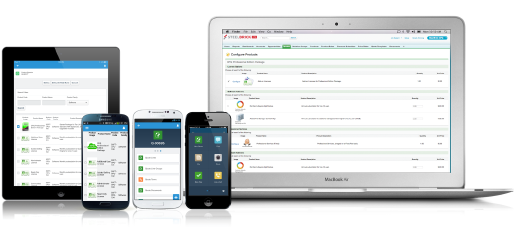 |