Chose Screaming Frog
RankPro, Semrush, Keyword Hero, GetKeywords and KeywordSpy

| Product | Rating | Most Used By | Product Summary | Starting Price |
|---|---|---|---|---|
 Screaming Frog | N/A | N/A | $149 per year | |
 Textmetrics | N/A | Textmetrics (formerly Webtexttool) aims to help content creators create rank-boosting web content. The tools key differentiator is big data Textmetrics creates predictive data, by analyzing the data of users (anonymously). 20.000+ user generated texts are analyzed and compared to real-world outcomes. The best performing outcomes are used to better its real-time optimization tips. Value prop: More website… | N/A |
| Screaming Frog SEO Spider | Textmetrics | |||||||||||||||
|---|---|---|---|---|---|---|---|---|---|---|---|---|---|---|---|---|
| Editions & Modules |
| No answers on this topic | ||||||||||||||
| Offerings |
| |||||||||||||||
| Entry-level Setup Fee | No setup fee | No setup fee | ||||||||||||||
| Additional Details | — | — | ||||||||||||||
| More Pricing Information | ||||||||||||||||
| Screaming Frog SEO Spider | Textmetrics | |
|---|---|---|
| Considered Both Products | Screaming Frog  Nirav Sampat SEO Manager Chose Screaming Frog When it comes to crawling a website nothing can beat Screaming Frog.  Chris Coultas SEO Specialist Chose Screaming Frog The biggest difference between DeepCrawl and Screaming Frog is cost. Screaming Frog is significantly cheaper, and fits within a budget much easier. For most websites that aren't huge it crawls quicker to. DeepCrawl is the better tool for analysing larger websites and is easier …  Cole Watts Digital Marketing Manager Chose Screaming Frog Please note that, while Screaming Frog is a great tool for scanning the website all it is, is a tool that scans the website. For deeper analysis or for keyword analysis, please take a look at tools like SEMRush and Ahrefs for your medium size business, or Conductor for a …  Scott Walker Director of Digital Marketing Chose Screaming Frog Screaming Frog has a free version, so it competes with the paid programs (like Moz) solely in the fact that it can be used without incurring a budget line item. Compared to many other programs that also offer free scans, Screaming Frog is fast and much more customizable. Since …  Frank Watson CEO Chose Screaming Frog A highly competent tool that leads in some areas and not in others.  Jeff Smith Owner Principal Chose Screaming Frog I use several tools that can do much of what Screaming Frog can do - SemRush and SEO Powersuite. However, for what we use Screaming Frog for, it is the best tool. During a 15-minute phone call with a potential new client, I can crawl the site and determine what shape the site …  Alyssa O'Mara Owner Chose Screaming Frog Screaming Frog is different than a tool like SEMrush. It is a crawler that allows you to see the data like Google would see it when they crawl your site. A tool like SEMrush, or MOZ, gives you more analysis around SEO for the website you are reviewing. I wouldn't want to be …  Dragan Nikolic SEO & Project Manager Chose Screaming Frog Our company also uses Website Auditor from the SEO PowerSuite by LinkAssistant and it's a great tool with a lot of fancy features and even an IA (information architecture) visualization which shows you how your website looks and how your pages interconnect. Screaming Frog is a …  Tom Pick Independent B2B Digital Marketing Consultant Chose Screaming Frog Authority Labs is good for a limited function--tracking keyword rankings (though its keyword suggestion capability has recently improved as well) but doesn't do the page crawling that Screaming Frog does. Serpstat and SEMRush both have a lot more functions but also cost …  Robbin Block Creative Marketing Strategist Chose Screaming Frog The tools I mentioned are in the same space, tools for SEO, but aren't website scrapers like Screaming Frog. We haven't found another tool that we like as much for providing simple and straight forward insights about a website.  Justin Roodman Product Marketing Manager Chose Screaming Frog SEMrush is not a dedicated on-demand SEO crawler like Screaming Frog. SEMRush is more of a digital marketing suite that happens to offer SEO crawling along with other marketing tools. As such, it's much more of a commitment; which you'll notice with a monthly cost versus a …  Scott Richardson Co Founder and SEO Consultant Chose Screaming Frog Screaming Frog SEO Spider is probably the best non-client facing SEO audit tool in terms of technical SEO. There are other tools on the market that do a more complete job of keyword tracking, competitive analysis, and backlink profiles...however, for analyzing the technical SEO …  Katie Goh SEM/SEO Analyst Chose Screaming Frog We have a deep crawl integration with another tool and still find the information on DeepCrawl valuable because this tool is better at listing out reccomendations. However, Screaming Frog is easier to use, doesn't have limits on how many crawls it can run (on the Pro plan we … | Textmetrics  Cuong Tran Founder Chose Textmetrics WebTextTool plugin works like a charm, but it should better integrate with Yoast, as it would create a huge benefit. |
| Screaming Frog SEO Spider | Textmetrics | |||||||||||||||||||||||||||
|---|---|---|---|---|---|---|---|---|---|---|---|---|---|---|---|---|---|---|---|---|---|---|---|---|---|---|---|---|
| SEO |
| |||||||||||||||||||||||||||
| SEO Channels |
| |||||||||||||||||||||||||||
| SEO Platform & Account Management |
|
| Screaming Frog SEO Spider | Textmetrics | |
|---|---|---|
| Small Businesses |  Nozzle Score 10.0 out of 10 | Nozzle Score 10.0 out of 10 |
| Medium-sized Companies |  Advanced Web Ranking Score 8.2 out of 10 | Advanced Web Ranking Score 8.2 out of 10 |
| Enterprises |  Dupli Checker (DupliChecker.com) Score 8.5 out of 10 | Dupli Checker (DupliChecker.com) Score 8.5 out of 10 |
| All Alternatives | View all alternatives | View all alternatives |
| Screaming Frog SEO Spider | Textmetrics | |
|---|---|---|
| Likelihood to Recommend | 10.0 (0 ratings) | 10.0 (0 ratings) |
| Likelihood to Renew | 10.0 (0 ratings) | - (0 ratings) |
| Usability | 8.5 (0 ratings) | - (0 ratings) |
| Support Rating | 7.9 (0 ratings) | 10.0 (0 ratings) |
| Implementation Rating | 7.0 (0 ratings) | - (0 ratings) |
| Screaming Frog SEO Spider | Textmetrics | |
|---|---|---|
| Likelihood to Recommend |
Justin Roodman Product Marketing Manager |
Cuong Tran Founder |
| Pros |
|
Cuong Tran Founder |
| Cons |
 Brynna Baldauf SEO Strategist |
|
| Likelihood to Renew |
 Anthony Daronzio SEO Director | No answers on this topic |
| Usability |
| No answers on this topic |
| Support Rating |
Scott Walker Director of Digital Marketing |
|
| Implementation Rating |
Anthony Daronzio SEO Director | No answers on this topic |
| Alternatives Considered |
Chris Coultas SEO Specialist |
|
| Return on Investment |
 Ari Roth Senior Account Manager |
|
| ScreenShots | Textmetrics Screenshots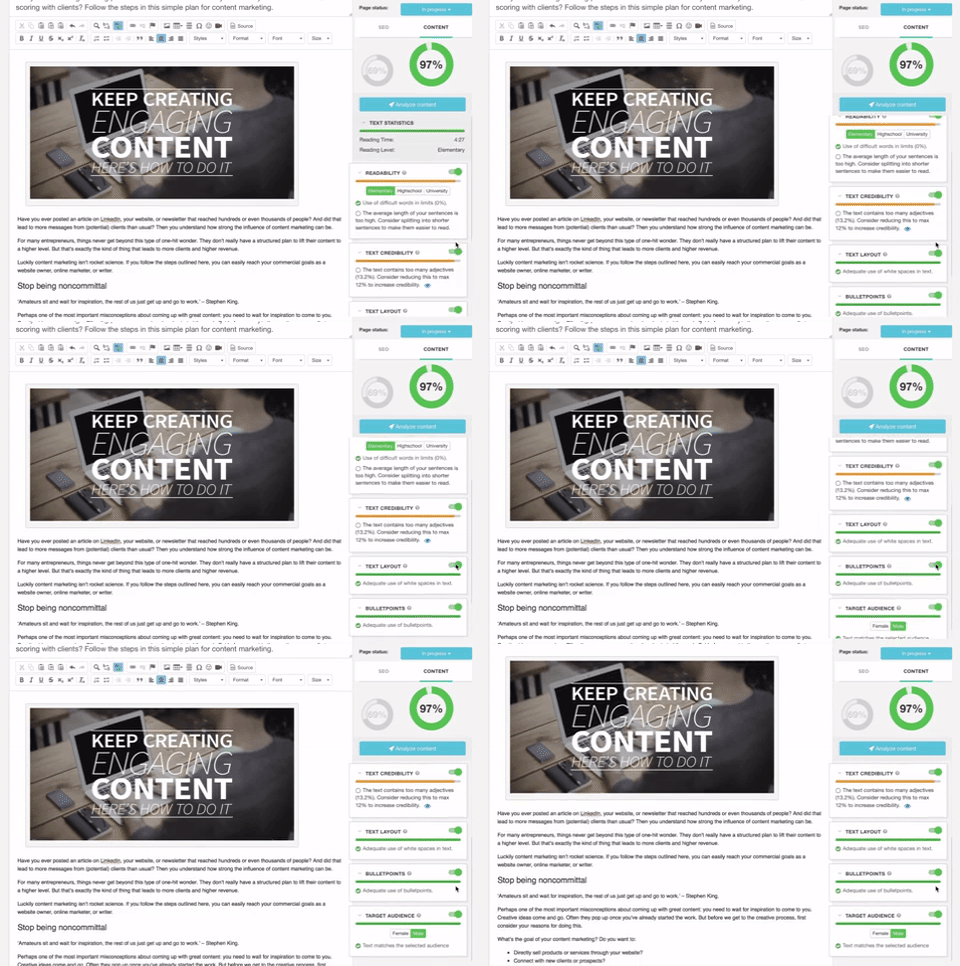 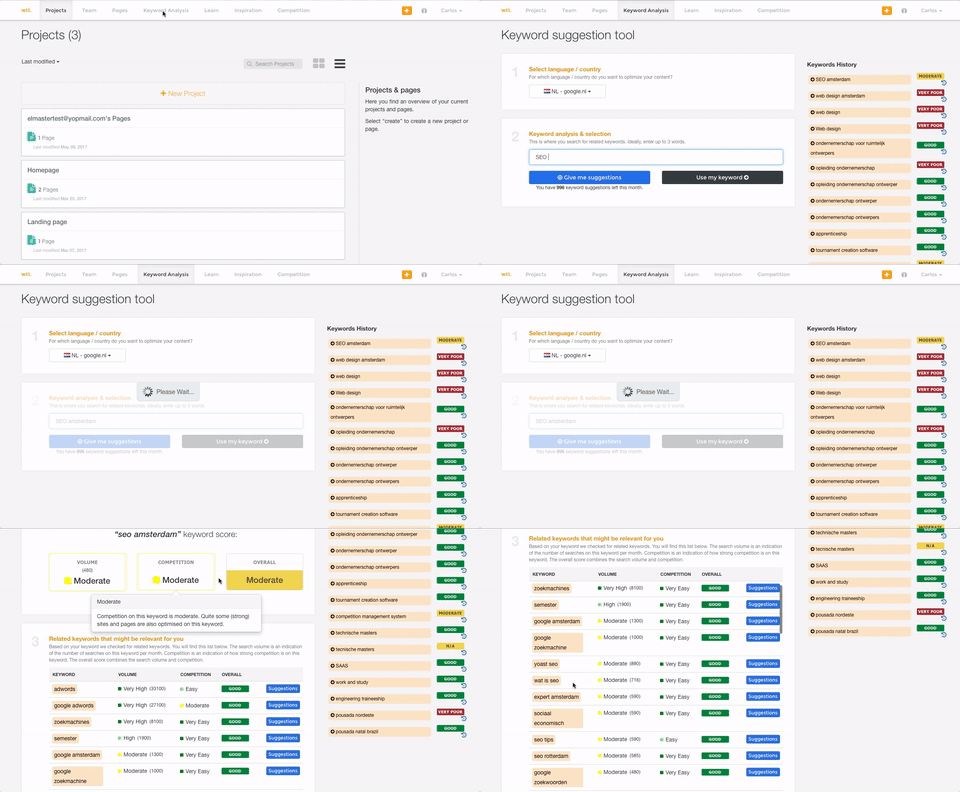  |