Chose Shopify Plus
There are all good for business who are just starting but as the business grows the platform has to be able to scale with it

| Product | Rating | Most Used By | Product Summary | Starting Price |
|---|---|---|---|---|
 Shopify Plus | N/A | Shopify Plus is an eCommerce solution built for enterprise-level companies that enables them to sell online and offline across social channels like Facebook , Pinterest, and marketplaces like Amazon and eBay. | $2,300 per month | |
 Spryker Cloud Commerce OS | N/A | Spryker Cloud Commerce OS is a modular Commerce System that enables B2B, B2C, and Marketplace business models through any customer interface, touchpoint, and device. Boasting extensibility, best-in-class performance, and fast time-to-market, the vendor states Spryker is trusted by brands such as TOYOTA, HILTI, and TomTailor. The Spryker Cloud Commerce OS NOW version has been specifically developed for manufacturers and brands who want to reach customers directly online. | $900,000 12-month contract |
| Shopify Plus | Spryker Cloud Commerce OS | |||||||||||||||
|---|---|---|---|---|---|---|---|---|---|---|---|---|---|---|---|---|
| Editions & Modules |
|
| ||||||||||||||
| Offerings |
| |||||||||||||||
| Entry-level Setup Fee | No setup fee | Required | ||||||||||||||
| Additional Details | — | Pricing is based on the duration and terms of your contract with the vendor. This entitles you to a specified quantity of use for the contract duration. If you choose not to renew or replace your contract before it ends, access to these entitlements will expire. | ||||||||||||||
| More Pricing Information | ||||||||||||||||
| Shopify Plus | Spryker Cloud Commerce OS | |
|---|---|---|
| Considered Both Products |  Shopify Plus  Nathan Simmons Head of Web Chose Shopify Plus A far more professional approach to e-commerce in general. Servers and the core SSL are taken care of and you're left with a whole host of tools to sell, sell and sell.  Brian Manning President & Co-Founder Chose Shopify Plus Shopify Plus has the most robust capabilities of the pure cloud plays and the app store ecosystem is the largest and best.  Mauro Biefeni Head of Information Technology Chose Shopify Plus Netsuite SuiteCommerce, which has a very high cost of ownership, and Magento, which although powerful can be expensive and is too complex for the average eComm requirements. Too flexible can be bad in some cases.  Darcy Knapp, MBA President Chose Shopify Plus Shopify Plus offers a more robust solution than Woo commerce and is easier to train on than Big Commerce. Woo commerce is freeware with no support. Big Commerce offers more SEO features and is a more powerful solution, but harder to remote train users on - lots more …  Rachel Blankenship CX Trainer Chose Shopify Plus Shopify  Jonathan Oates Director of eCommerce Chose Shopify Plus Shopify Olus is more of a SAAS than the self-managed Magento solution. With this comes a host of benefits such as hosting, security, updates, and new technology that you no longer have to worry about. Specifically, with Shopify Plus, scripts can be very powerful and when …  Ricky Jordan Senior Computer Systems Admin Chose Shopify Plus Big Cartel, Magento, Squarespace, Wordpress, Wix, etc are all decent solutions for eCommerce, but none of them features the easy setup, ease of use, simple streamlined dashboard/interface, and customer website experience that Shopify Plus has. Shopify (non plus) alone is a … |  Spryker Cloud Commerce OS  Shaya Pourmirza Head Of Ecommerce & Data Engineering Chose Spryker Cloud Commerce OS Headless was the winning factor  Thomas Heissler Director Business Development Chose Spryker Cloud Commerce OS Spryker is much more modular and can be adapted more individually to the requirements.  Matteo Ender Mitglied der Geschäftsführung & Co-Founder Chose Spryker Cloud Commerce OS
 Torsten Wolff Team Lead / Senior Project Manager / Partner Manager Chose Spryker Cloud Commerce OS
 Tim Schestag E-Commerce Consultant Chose Spryker Cloud Commerce OS commercetools  Thomas Schiller Senior Consultant Chose Spryker Cloud Commerce OS Spryker is more flexible and stable in real complex business processes.  Magdalena Kim Novak Consultant Digital Transformation Chose Spryker Cloud Commerce OS Easier user experience for business users of CMS, faster implementation and better suited for MVP approach, TTTM and go-to-market.  Thomas Kafurke Expert Project Manager, Team Lead Chose Spryker Cloud Commerce OS Spryker as a PaaS solution allows individualization on code and project level. Developers enjoy working with Spryker due to its modular structure as it is easy to learn, code and customize.  Khong Thanh Phong Full Stack Developer Chose Spryker Cloud Commerce OS We chose Spyker because Spryker provided exactly what we needed. A complete system that fully meets our business. Good support comes from Spyker's side  Marco Kaiser Senior Software Engineer Chose Spryker Cloud Commerce OS Spryker is a PHP and open-source stack-based solution, it's more a component framework, and not a traditional software product. You build your own custom solution based on best practices.  Günther Kapfer Head of Digital Transformation & E-Commerce Chose Spryker Cloud Commerce OS None.  Torben Hauffe Head Of International Sales Chose Spryker Cloud Commerce OS There is Hybris and salesforce which I was thinking to choose as an opportunity. The selection goes to Spryker Cloud Commerce OS, cause it brings in all the most value for us as an agency and much more for our customers. All in all, Spryker Cloud Commerce OS has everything that …  Andreas Saks Junior Software Developer Chose Spryker Cloud Commerce OS Spryker offers the customizability of Symfony but adds predeveloped features and an infrastructure that is more suited for e-commerce projects. Because of it's structure and used patterns the code can be understood between multiple developers and even different companies that …  Hieu Le Technical Architect Chose Spryker Cloud Commerce OS Spryker is more advanced and allow more customization. The storefront is already fast in Spryker default implementation without any special settings. Spryker Commerce OS also fit better with complex business requirements and have a clearer approach to connect with third-party … |
| Shopify Plus | Spryker Cloud Commerce OS | ||||||||||||||||||||||||||||||
|---|---|---|---|---|---|---|---|---|---|---|---|---|---|---|---|---|---|---|---|---|---|---|---|---|---|---|---|---|---|---|---|
| Online Storefront |
| ||||||||||||||||||||||||||||||
| Online Shopping Cart |
| ||||||||||||||||||||||||||||||
| Online Payment System |
| ||||||||||||||||||||||||||||||
| eCommerce Marketing |
| ||||||||||||||||||||||||||||||
| eCommerce Business Management |
|
| Shopify Plus | Spryker Cloud Commerce OS | |
|---|---|---|
| Small Businesses |  Ecwid by Lightspeed Score 10.0 out of 10 | Ecwid by Lightspeed Score 10.0 out of 10 |
| Medium-sized Companies |  IBM Digital Commerce Score 9.0 out of 10 | Shopify Plus Score 9.0 out of 10 |
| Enterprises | IBM Digital Commerce Score 9.0 out of 10 | IBM Digital Commerce Score 9.0 out of 10 |
| All Alternatives | View all alternatives | View all alternatives |
| Shopify Plus | Spryker Cloud Commerce OS | |
|---|---|---|
| Likelihood to Recommend | 9.5 (0 ratings) | 8.2 (0 ratings) |
| Usability | 9.6 (0 ratings) | 6.0 (0 ratings) |
| Support Rating | 10.0 (0 ratings) | 5.9 (0 ratings) |
| Shopify Plus | Spryker Cloud Commerce OS | |
|---|---|---|
| Likelihood to Recommend |
|
Tim Schestag E-Commerce Consultant |
| Pros |
|
 Moritz Jung Head of Development Partners |
| Cons |
Ricky Jordan Senior Computer Systems Admin |
Hieu Le Technical Architect |
| Usability |
|
 Saulius Lazaravičius Delivery Lead |
| Support Rating |
|
|
| Alternatives Considered |
|
|
| Return on Investment |
 Josh Fortin Warehouse Manager |
|
| ScreenShots | Shopify Plus Screenshots  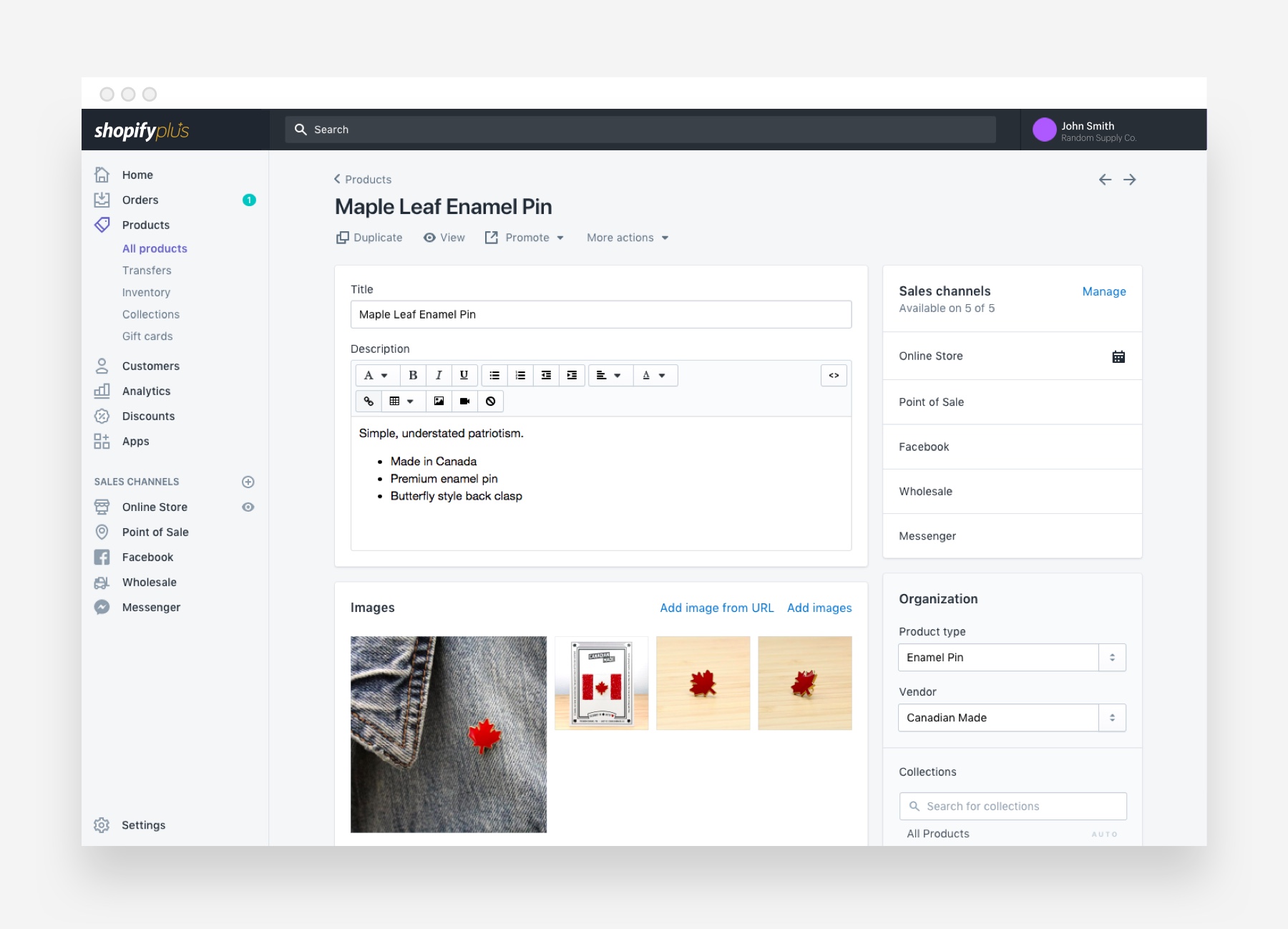  | Spryker Cloud Commerce OS Screenshots   |