Treasure Data is an enterprise customer data platform (CDP) that reclaims customer-centricity in the age of the digital customer. It does this by connecting all data and uniting teams and systems into one customer data platform to power purposeful engagements.
N/A
Zaius (discontinued)
Score 7.7 out of 10
N/A
Zaius, or Optimizely Data Platform after being acquired by Optimizely in March 2021, was a a customer data platform, or as the vendor describes it, B2C CRM. It helped B2C marketers grow revenue from their existing customer base using segmentation, personalization, marketing automation, and attribution tools. It is discontinued.
N/A
Pricing
Treasure Data
Zaius (discontinued)
Editions & Modules
No answers on this topic
No answers on this topic
Offerings
Pricing Offerings
Treasure Data
Zaius (discontinued)
Free Trial
No
No
Free/Freemium Version
No
No
Premium Consulting/Integration Services
No
No
Entry-level Setup Fee
Optional
No setup fee
Additional Details
—
—
More Pricing Information
Community Pulse
Treasure Data
Zaius (discontinued)
Best Alternatives
Treasure Data
Zaius (discontinued)
Small Businesses
Bloomreach - The Agentic Platform for Personalization
Score 8.4 out of 10
Bloomreach - The Agentic Platform for Personalization
Score 8.4 out of 10
Medium-sized Companies
Bloomreach - The Agentic Platform for Personalization
Score 8.4 out of 10
Bloomreach - The Agentic Platform for Personalization
Score 8.4 out of 10
Enterprises
Bloomreach - The Agentic Platform for Personalization
Score 8.4 out of 10
Bloomreach - The Agentic Platform for Personalization
Any time you need to process and store very large volumes of data at scale, Treasure Data will aways be at the forefront of my mind. Especially if the data being handled is constantly changing or evolving, rigid schemas just wont do. Treasure Data has the ability to adapt as your product needs change over time. Having the storage and processing flexibility is a huge win.
During high-volume communication times such as Black Friday and the holidays, Optimizely Data Platform's ability to allow us to seamlessly target (or exclude) certain audiences has enabled us to effectively interact with our customers without overdoing things. However, we would like to have the ability to send auto-order updates during peak volume times, as this would alleviate pressure on our customer service department.
CDP provides a unified view of data from all touchpoints in the customer journey until a single customer uses the service. This feature is very helpful in making service decisions and direction.
It provides a variety of extensions to bring your data together in one place and helps you do this easily.
Kits provided by Treasure Box provide basic but helpful methods for further development of services.
Pricing is a bit of a black box. We are currently priced on split hour usage and some spikes come out of nowhere and leave us seeking answers (and sometimes finding unsatisfactory ones).
Some jobs will fail, causing workflows to be interrupted due to a product change or a one-time product related issue. We usually contact Support in these cases, and while they are incredibly responsive and helpful, it would be great to have more proactive communication.
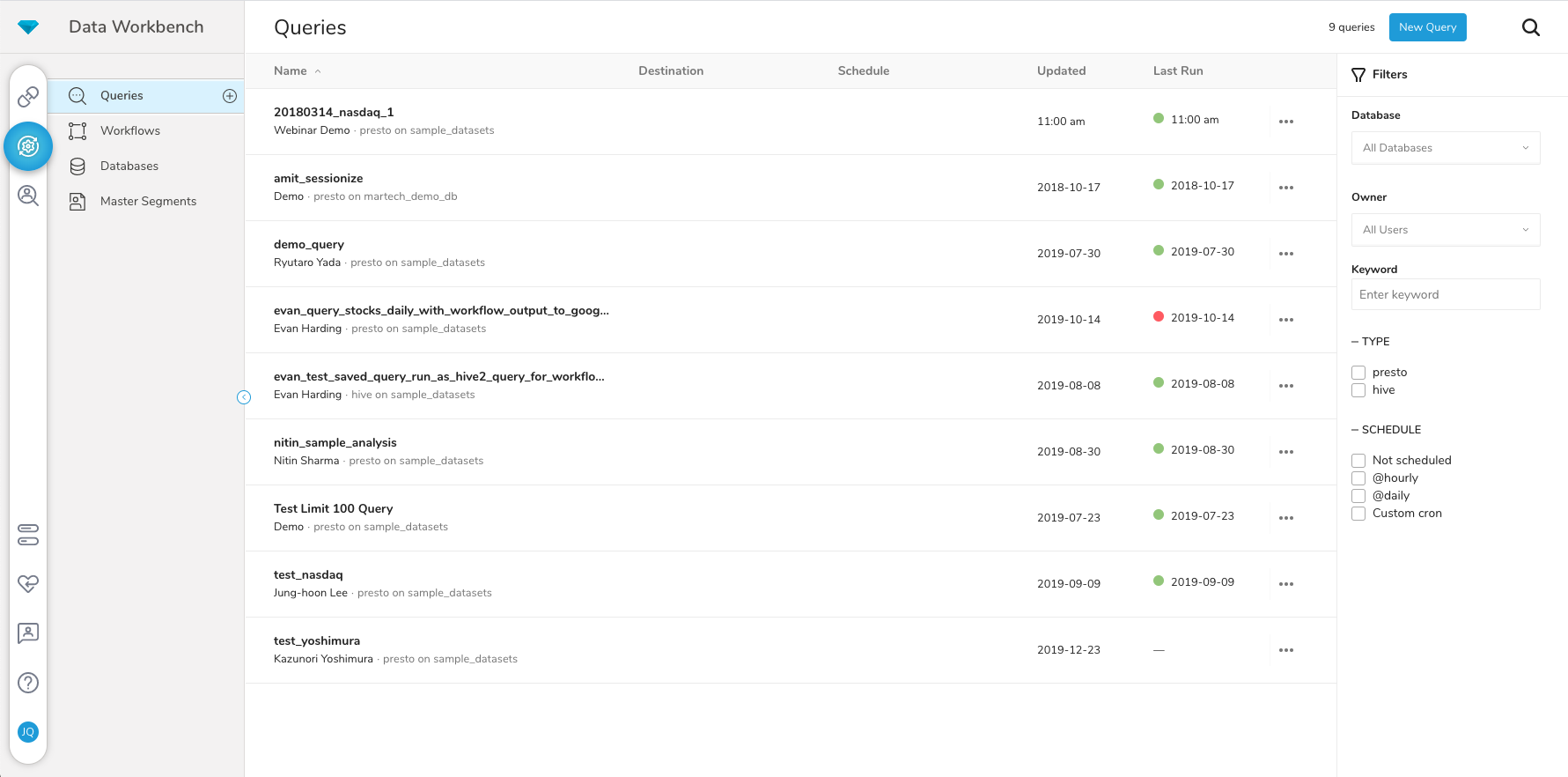
Treasure's UI leaves us wanting more in terms of organization and controls, especially as we scale and grow the number of data sources, queries, and workflows.
They finally have gotten on-site recommendations, hooray! I wish it happened sooner, and it is still early in its development, so I would say some things take longer than I would hope to do. But who does not feel that way about everyone? The key here is it gets done, and they keep improving things, which I love.
I would like there to be more opportunities to use it outside of eCommerce. I would love to use it for content-specific sites, but honestly, that is not what it was built for, so I will shut up about that now.
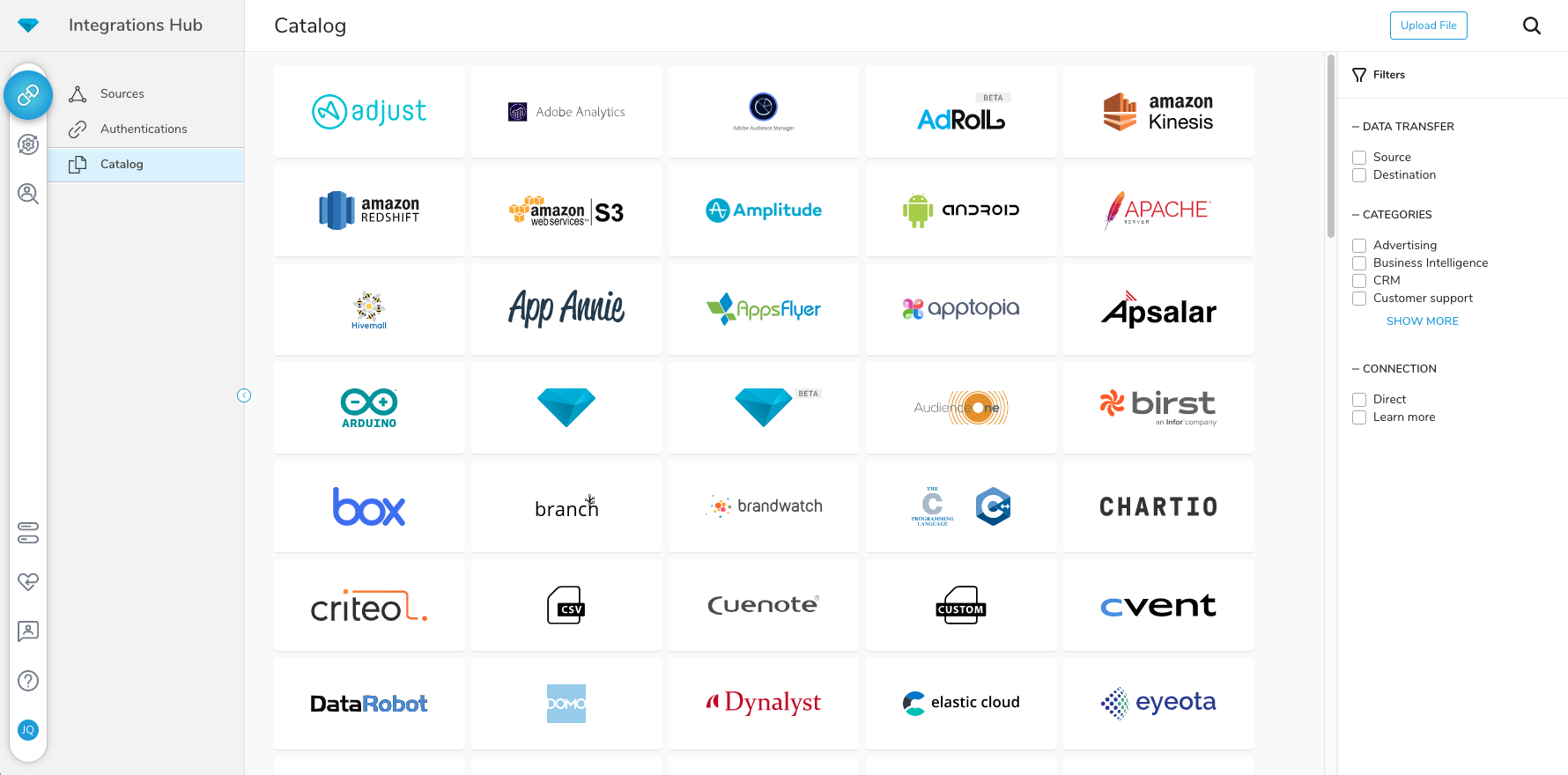
Because treasure data is a great platform with a great support team behind, it's a scalable solution that deals well with huge amounts of data every day and has a huge catalog of integrations that can be easily use to download data from several platforms, like aws s3, redshift, google bigquery.
There's so much that needs to be improved and it seems like not much has happened since Optimizely first took over. When Optimizely did take over, they reduced the UX of campaign reporting.
If you are a data person, you will likely understand the product and how to use it well. We did find that some of our queries run into memory issues though. If you are a marketer and want to build easy audience segments, I am not sure how easy it will be for you. We are still working through this.
As treasure data has a 24 hours support, every time we has big issues that impacts the zones, we do have immediatly support from the treasure data team, so I would say that we do not have any issues with availability
Since treasure data has started having a huge amount of data, sometimes we do have problems with the workflows logs because we generate a lot of then. But with integrations I have not to complain, its really easy to integrate with other platforms.
The technical team has a good hold on the nuances of the data related to our organization. I have found the online technical support on their site quite responsive including the L1 support. In cases where the L1 team isn't able to resolve, I have found they are prompt in getting the product team's input to get a quick resolution.
Positive - Onboarding was quick and easy. Positive - Access to a Zaius data analyst has been wonderful. Negative - I don't know who our CSM is if we even have one.
I wasnt here at the training in the start, but I had a few training with treasure data for a few functionalities, and they provided me god explanations and great documentations, eve if the project were in beta.
We have a home built CRM. From start to finish our implementation was a nightmare loaded with problems that destroyed my initial trust with the platform.
Both Tealium and Evergage are mostly focused on online sources. They don't have as easy or robust data model capability to ingest CRM, e-commerce, or offline data. Bluevenn has good identity resolution like TD, but the Unify data processes/model are not exposed to the customer to modify or develop data load workflows.
Optimizely Data Platform has a friendlier interface than most and feels more custom. If we have an idea we would like to implement, we know that it's possible to do so with ODP - it may take a bit of time and it might not be the most intuitive implementation, but it is possible. With other platforms, there is less room for creativity, and many ideas that you may come up with will, unfortunately just not be possible to implement.
When there are Treasure Data updates, there might be old functions that are deprecated or existing functions which no longer work as before --> this may have impact on existing workflows/queries
As many developers are working on the same environment, the jobs are queued because there is a limited amount of computation cores available --> if we want to increase it, our client needs to pay for more cores
As data are increasing, some workflows are too expensive and need to be rethought / made more efficient --> this means re-designing existing workflows and also requires constant support from Treasure Data which analyzes the queries and identifies points of improvement that allows client to pay less