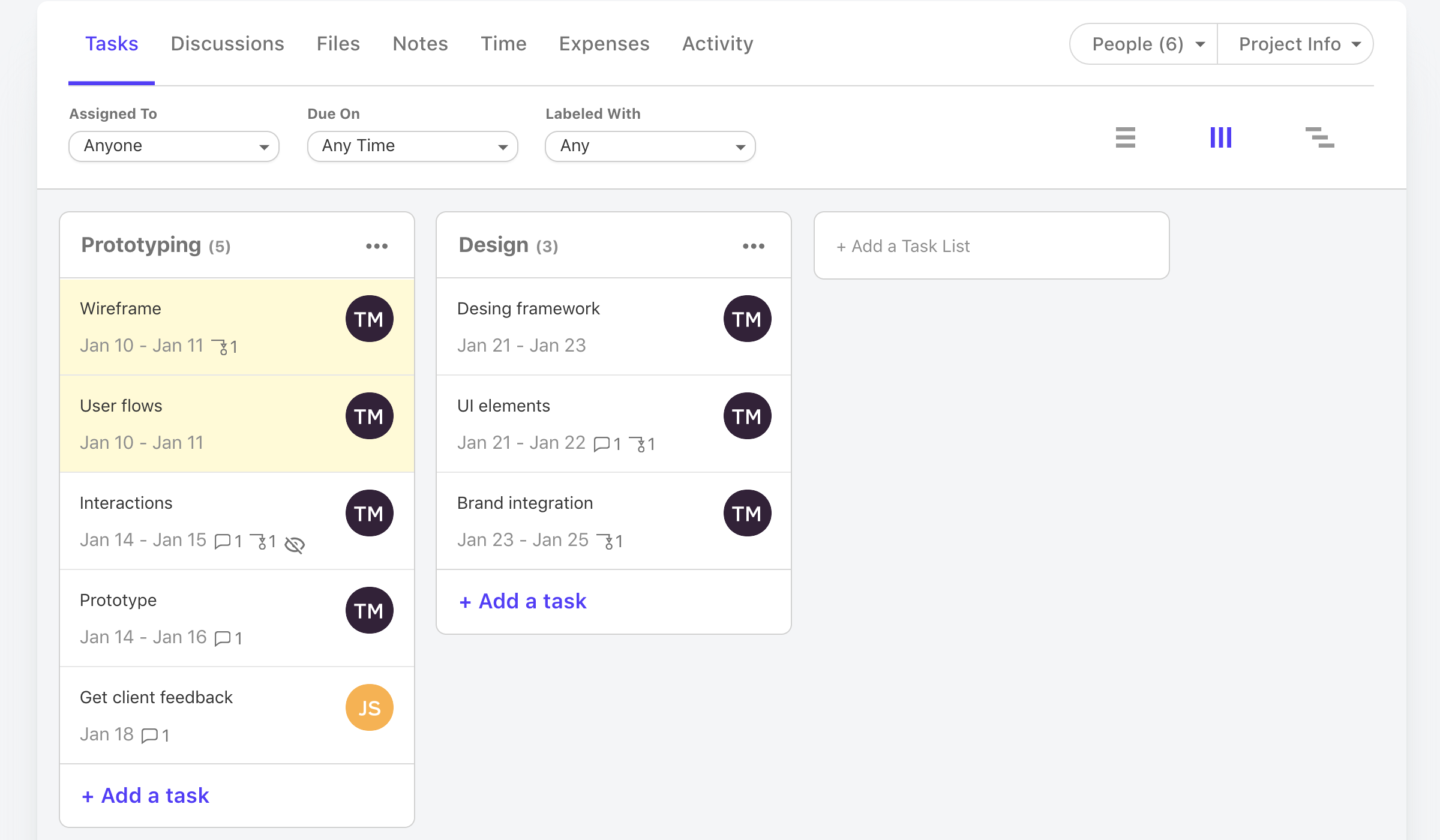
Active Collab is a project management solution built around features such as task management, collaboration, time tracking, and invoicing.
$8
per member/per month
Atlassian Jira
Score 8.3 out of 10
N/A
Atlassian Jira is a project management tool, featuring an interactive timeline for mapping work items, dependencies, and releases, Scrum boards for agile teams, and out-of-the-box reports and dashboards.
$9
per month per user
Pricing
ActiveCollab
Atlassian Jira
Editions & Modules
ActiveCollab Project Management
$8
per member/per month
Self-Hosted Plan
$999.00
license
Standard
$9
per month per user
Premium
$17
per month per user
Enterprise
Contact Sales
per year
Offerings
Pricing Offerings
ActiveCollab
Atlassian Jira
Free Trial
Yes
Yes
Free/Freemium Version
Yes
Yes
Premium Consulting/Integration Services
No
No
Entry-level Setup Fee
$6.25 per member, per month, annual billing
No setup fee
Additional Details
—
Higher volume teams may qualify buyers for a discount.
I have used multiple project management platforms such as ActiveCollab, JIRA, Trello, etc. Trello has great visualization with their (Kanban Board) board system and support drag and drop functionality for managing tasks. ActiveCollab, however, does not have the fancy …
Certainly, each of them has a particular advantage, which in the end makes it unique. ActiveCollab also belongs to a group of platforms created to be represented in particular, its way of project management is superior to JIRAor Trello. With this software, the work is more …
Since we moved from fixed capacity project to T&M we need some tool who support our billing & invoicing. HP ALM did not provide good support for invoicing so we moved out from HP ALM to ActiveCollab. The features like Timer, reminders are not available in other project management …
JIRA is the most advanced and robust of all the tools we
looked at to manage our projects and specifically our Agile processes. It is
flexible and robust, very professional-looking and widely used. Many of the
I like that you can visually monitor many projects simultaneously. I like that you can add tickets and issues to the system relatively quickly and easily. The tool is pretty intuitive and it only takes a few attempts before you understand how the system works.
Though with JIRA you need to buy a lot of plugins but it is still cheaper than HP ALM or HPE Octane which is very costly. HP QC is a fully functional software lifecycle tool and probably strongest in its test management capabilities. But in Agile we don't need that extensive …
Active Collab is great for small teams who want a web-based project management platform to help them on their day-to-day workflow tasks, billing, estimations, vendor assignments and even client communications. It is also great for agencies with users who are sometimes remotely working. Active Collab starts to show shortcomings when you have an immense amount of projects in the system (1000+), and, being a web-based platform, can sometimes experience downtime.
Jira facilitates software development, bug tracking, and sprints. It's ideal for structured workflows, issue management, and customer communication. However, more straightforward tools might be more efficient for highly creative, unstructured tasks or tiny, agile teams with quick visual overviews. Jira's complexity can be overkill for basic task lists.
It isn't possible to set members of staff as part time, so if someone is unavailable on certain days you must manually enter them as OOO every single day that they are not in, that other teammates work. Hours also can't be edited individually - everyone is treated as working the same hours in a day, rendering capacity planner useless for flexi working teams
Subtasks cannot be assigned their own hours and deadlines, meaning the To Do list view can't be seen in actual date order and capacity planner does not reflect all time allocated to an individual's schedule unless every task is set up as a separate task rather than subtask
There is no way to see all tasks of a certain type across multiple campaigns (e.g all copywriting tasks vs all technical tasks) - support team suggested exporting data and making spreadsheets
Kanban view isn't available for people's own task lists ('board' view here shows a list)
Not possible to have one task be assigned to more than one person
Notifications are not sent when tasks are updated, so you have to leave comments and tag people each time
JIRA is highly integrated into our organization. Nearly every department uses it, and many have multiple JIRA projects set up to track different types of work. We rolled out JIRA in a staged manner, but it continued to be adopted by more and more people and departments because it continues to show results. I expect we will continue to renew our JIRA license for years to come
Atlassian Jira is relatively easy to use, but there are several ways to configure it, which can make it more complicated if you configure it incorrectly. Keeping the customizations and complexity limited to being the project would be suggested to ensure you don't lose in-built Atlassian Jira features, then change the configuration as you find things aren't meeting your exact needs.
Did not face any issues and whenever they plan maintanance they update all of us very well in advance also so in that view we are good with the product stability.
Performance is really good though it holds lot of data it loads quickly especially search operation also get the results very quickly as needed hence its good
The support team is responsive to requests and their annual support fees are reasonable. Honestly, we don't have to contact them much. Updates happen automatically and the platform is very solid and does not require a lot of support. Documentation is good and the platform is easy to learn.
I have not had a chance to contact JIRA's customer support. It does offer extensive documentation, although it often feels too technical for me. There is also a JIRA training app that lets you take little lessons and quizzes on different areas (e.g., JIRA basics, agile). I did find it a helpful way to teach myself.
Had received training from our own internal user so it was good and also very easy to understand topics and many tasks in the UI are self explanatory and we can do by our own
One of their strong points i stheir documentation. Almost all of the basic set up needed within JIRA is available online through atlassian and its easy to find and very precise. The more critical issues need to be addressed as well and hence the rating of 8 instead of a 9.
Take your time implementing Jira. Make sure you understand how you want to handle your projects and workflows. Investing more time in the implementation can pay off in a long run. It basically took us 5 days to define and implement correctly, but that meant smooth sailing later on.
Since we moved from fixed capacity project to T&M we need some tool who support our billing & invoicing. HP ALM did not provide good support for invoicing so we moved out from HP ALM to ActiveCollab. The features like Timer, reminders are not available in other project management tools like JIRA, Rally & ALM making AC the first choice since we have strict SLA's & AC helps in meeting that.
Jira is more feature-rich than Trello and also has better integration with other tools. Trello is a lot more focused on work tracking, while Jira can do a lot more than that. Both can also be combined, although they're often considered mutually exclusive alternatives—I've seen cases where companies choose to use either one or the other, but I haven't met an actual case of a company using both.
A central communication portal is used to keep all members of the team informed as to the status of specific projects. All staff have access to read past discussions to enable contribution to the current discussion.
We have found it difficult to get our clients to adopt usage of ActiveCollab for communication on a reliable basis.
The cost per person is high when using it as a communication center.
JIRA has increased the teams' productivity and efficiency; the sprint timelines have improved by 15-20%.
JIRA's integration with tools like Bitbucket and Confluence has improved functional collaboration, leading to faster decision-making and issue resolution by approximately 10-15%.
Additional functionality requires additional third-party plugins, which require additional costs; the requirements of these plugins increase the costs by approximately 15%.