Adobe acquired Omniture in 2009 and re-branded the platform as SiteCatalyst. It is now part of Adobe Marketing Cloud along with other products such as social marketing, test and targeting, and tag management.
SiteCatalyst is one of the leading vendors in the web analytics category and is particularly strong in combining web analytics with other digital marketing capabilities like audience management and data management.
Adobe Analytics also includes predictive marketing capabilities that help…
N/A
Quantum Metric
Score 8.0 out of 10
Enterprise companies (1,001+ employees)
Quantum Metric is designed to help organizations build better digital products faster. Their platform for Continuous Product Design gives business and IT teams a single version of truth which the vendor describes as fast, quantified, and grounded on what customers actually experience. The solution ultimately aims to help teams agree on priorities, build products customers love, and innovate with speed and confidence.
N/A
Pricing
Adobe Analytics
Quantum Metric
Editions & Modules
No answers on this topic
No answers on this topic
Offerings
Pricing Offerings
Adobe Analytics
Quantum Metric
Free Trial
No
No
Free/Freemium Version
No
No
Premium Consulting/Integration Services
No
No
Entry-level Setup Fee
Optional
No setup fee
Additional Details
—
—
More Pricing Information
Community Pulse
Adobe Analytics
Quantum Metric
Considered Both Products
Adobe Analytics
Verified User
Anonymous
Chose Adobe Analytics
In the past, I've used Google Analytics and also Quantum Metric, but I think Adobe Analytics is on the more robust side.
It is much quicker to get to a basic level of understanding with Analytics, however Analytics knowledge provides a good start for understanding how to build segments in AEP.
Adobe Analytics is very similar to Google Analytics; however, I can see how it can be difficult to set up for some companies. Yet, I think Adobe Analytics is better--no data silos, segment-based metrics that work for different types of dimensions, product-specific attribution, …
We use multiple analytics tools for various parts of the business. Quantum Metric's replay function is superior to any other tool we've used. The ability to see data and make custom dashboards is in many ways more intuitive than Adobe Analytics and other tools, although we …
its well suited for the environments for the workloads of huge transactions,huge I/O,avoiding delays for the workloads which need immediate attention with great workflows.For the great transformations and data mining it would be helpful,for great customer behaviorial, it would …
Quantum Metric is a huge leap up from Mouseflow, which is very basic. Quantum offers more filters so I'm not sifting through thousands of recordings to find one or two. My organization uses Adobe for our everyday analytics and not Quantum. They do different things and I don't …
Quantum's support is unmatched, and implementing new tracking is a breeze. Quantum makes it easy to dive beneath the numbers and see the customer sessions behind them. It enables more empathy and behavioral understanding. Quantum's visualizations aren't as easy to use, and the …
In other tools we cannot see the user journey, in other tools we need to write multiple queries but here the choice of filter is very easy. We can easily filter out the required data without any complicated query. It shows the customer journey like a video and we can play it …
I have used other tools like Dynatrace. Quantum Metric is better suited to look for errors and spot issues in user sessions, it has a more friendly UI.
The biggest QM advantage is that you can see customer's actions on the live preview and almost immediately. So you can catch customers up, on the session, while the customer is still using your portal. There is a lot of information provided on the session, like API calls and …
IBM Tealeaf features and capabilities were falling behind in the industry. ClickTale was very similar to IBM Tealeaf. We also reviewed Full Story, Crazy Egg, Glass Door, and others. Quantum Metric was clearly a leading-edge solution as we no longer had to worry about …
Maybe for a small company with small products for their thing, Adobe may be bit of an implementation too much for them, but when it comes to companies like us, like a life sciences or large enterprises and even small enterprises, but with more products, more analysis that they need to make their marketing experience better, maybe Adobe product is the best suitable.
If you're looking to go beyond session replay and have a tool with intelligence to show you specific issues, and prioritize those, I think this is a good tool. Retailers that have had ups and downs, and are maybe seeing an increase in their online traffic/sales, who want a better view of how to improve the customer experience. You need a fairly mature digital analytics environment for this to make sense. If you have a more basic analytics environment, or you don't have the people/skills to use all the information QM can provide, it's probably not a good fit.
eVars (love, wish there was more but I heard they are unlimited in AJA)
Projects. The transition from Reports to Projects was easier for me to navigate than I thought it was going to be.
Adobe Templates. Again with the love. Nothing helps me more than copying a template and then deconstructing it to see how it works and reconstruct to how I want it to be.
Identifying user pain points and frustrations. Quantum Metrics has a data point called Rage Click which shows when a customer has clicked multiple times back to back on a particular section of the website.
Replaying a session to see everything that is loading on the front end to the customer, as well as the backed end of the website, has been critical in troubleshooting the experience.
Heatmaps are a awesome tool we have found very useful in showing engagement with different content on the page, how far user scroll & drop off and to see a split side by side view of the same page in an a/b test.
Our site has about 250,000 definitions pages on dictionary.com. We've got about 150,000 synonym pages across the source.com. So very high volume of pages. As you can imagine, most of these are pretty low traffic. You've got maybe that top 5%, 10% are really driving a huge amount of traffic, but then you have all these really obscure things out there. There's still a lot of important information you can get there and oftentimes in our Adobe Analytics reporting suite, it'll kind of bundle things at low traffic at a pretty low threshold for us to get to. So that can be a limitation when we're trying to do some really detailed keyword analysis. The way we've gotten around that is we make use of the data feed and the export. So we make the data available to our analyst in more of that raw state. So when they really do need to truly get into that weeds data, we don't run into that low traffic limitation.
New pricing models are very expensive compared to old pricing model, even though it includes several additional tools, most of which seem to be beneficial
Horrible support experience despite working with escalation teams to try and resolve
Several bugs in recent releases which remain unresolved for many months at a time
Quantum is a nice tool and is user friendly however I believe there always room for improvement. We have experienced minor issues with a few sessions which were solved by Quantum support reps in a timely manner and some of the dashboards are not as robust as other tools we use
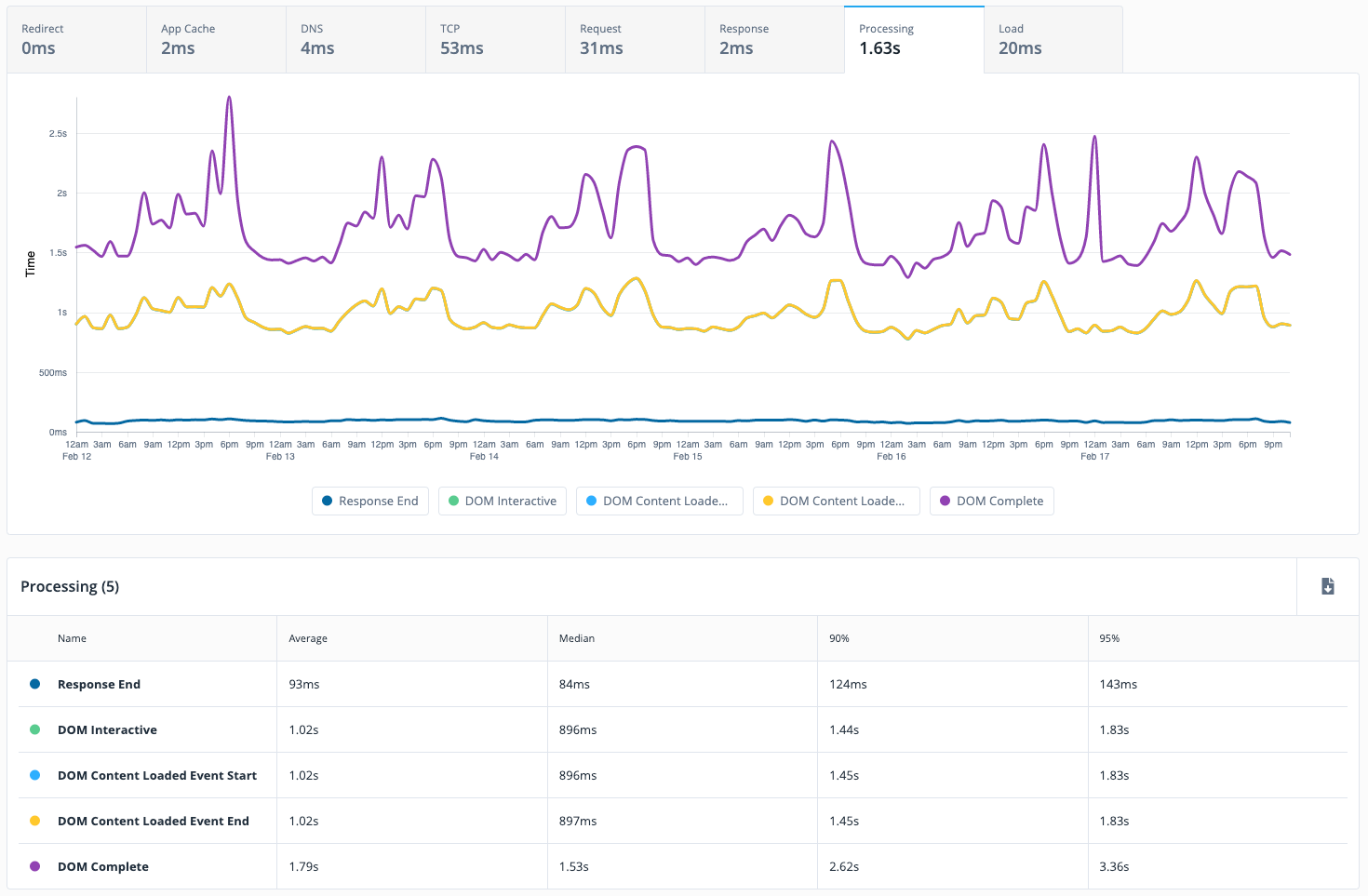
Sometimes the processing times are very long. I have had reports or dashboards time out multiple times during presentations. It could be improved. It is understandable since there is a huge data set that the tool is processing before showing anything, however for a company that large they should invest in optimizing processing times.
For a new user, it's pretty intuitive to onboard and start doing the basic functionalities. But QM has a lot of functionalities which can be leveraged by more team members (especially when you don't have analysts dedicatedly using this) if further enhancements to usability are made.
I do not ever recall a time when Adobe Analytics was unavailable to me to use in the 8 or so years I have been an end user of the product. My most-used day-to-day analytics tool Parse.ly however, generally has a multiple hours planned offline maintenance every two to four weeks, and sometimes has issues collecting realtime analytics that last anywhere between 15 minutes to an hour, and happen anywhere between 1 to 5 times a month.
Overall, Adobe's servers seem responsive. Like any large-scale SAS provider, they can have occasional slowdowns where, I presume, a node is not available and other servers get bogged down with the user load. I have noticed this with both large and small data sets and reports.
On that note, Adobe Analytics can take a long time to run reports and pull various data points, depending on the period of time, number of metrics and segments applied. As you create reports, particularly in Workspace, the data are pulled in real-time while you're creating the report. This can often cause issues while trying to drag more metrics into the interface when certain elements of a table are grayed out because data is being pulled in.The more data points and segments involved, the longer it takes to update. When you look at larger windows of time, it takes even longer. If one were to compare to Google Analytics or one of the open source products like Piwik or Motomo, Adobe seems much slower. However, Adobe also supports far more variables than other web analytics products.
I barely see any communication from Adobe Analytics. The content on the web is also not that great or easy to read. I would recommend a better communication about the product and the new addons information to come to its user by a better mean.
I've been very impressed with the support Quantum Metric has provided. Our amazing Customer Success team has provided excellent service and has gone above and beyond in helping us use and understand the tool. We hold weekly calls with multiple teams and QM has been proactive in bringing things to our team's attention and making suggestions. The support has been one of the most important aspects of having QM and has allowed us to make great strides in improving how we use data and user research in our work.
It was a one-day training several years ago that cost the organization several thousand dollars. There were only about 10 people in the training class. Adobe tried to cram so much information into that one-day class that none of our users felt like they really learned anything helpful from the experience. Follow-up training is too expensive
The online training for Adobe SiteCatalyst consists of short product videos. These are ok, but only go so far. For a while Adobe charged a fee for this, but recently made these available for free. There are many great blog posts that help users learn how to apply the product as well.
It is a large effort to implement. Throwing a developer with zero experience with Adobe Analytics with no support is a REALLY BAD IDEA!!! Having experienced developers working as a team is crucial to a strong implementation. I say this because I have experienced both scenarios. I was the only developer on an implementation project and I had no experience with Adobe Analytics. As a result I made many architecturally bad decisions which lead to a rigid fragile implementation that eventually was scraped. It took some hard lessons to learn that Adobe Analytics was not as simple as their sales reps make it sound. Using the Adobe Dynamic Tag Manager made sequential implementations incredibly STRONG. Having a DTM to manage the code was a miracle and a life saver!!! If you plan on doing a big enterprise level implementation, please seriously consider using the Adobe Dynamic Tag Manager!!! it made code maintenance super slick and easy which is super important for a developer!!!
Historically I've looked at a lot of different products. More recently I'd say Mamo and Google Analytics. Those are probably the two big ones that I've seen around, so yeah. It's more feature rich. It provides more dimensions, more breakdowns, and it also scales data better
Quantum Metric has unmatched support and is easy to use. The simple data visualization gave us an excellent analysis on specific pages and was a game changer. In other words, other tools may offer the same, but that's all. An easy-to-understand breakdown of how customers spent their time is provided. It makes it easier to empathize with others and understand their behaviors. Quantum Metric offers the whole package, unlike other tools.
My organization uses Adobe Analytics across a multitude of brand portfolios. Each brand has multiple websites, mobile apps and some even have connected TV apps/channels on Roku and similar devices. Adobe can handle the multitude of properties that have simple, small(ish) websites and the larger brand properties that include web, mobile and connected TVs/OTT devices.
Each of those larger brands has multiple categories and channels to keep track of. We can see the data by channel/device or aggregate all the data together. This gives our executive teams the full picture and the departmental teams the view they need to see their own performance.
Adobe Analytics impacts nearly every aspect of a billion plus dollar revenue eCommerce business. From measuring the impact of new build features to marketing campaigns.
We are saving substantial money and resource effort by consolidating all of our properties to Adobe Analytics from alternative solutions, at which point we will finally be able to report on Total Digital, rather than disparate reports.
We support experimentation on every platform and the performance is only known through Adobe Analytics tagging.