
Sunny Hemnani
Senior Software Engineer
Chose Camunda
Pega Client Lifecycle Management

| Product | Rating | Most Used By | Product Summary | Starting Price |
|---|---|---|---|---|
 Camunda | N/A | Camunda is a process orchestration tool designed to help organizations design, automate, and improve any process. Built for business and IT collaboration using BPMN and DMN standards, Camunda aims to enable seamless integration across endpoints to transform mission-critical processes. | N/A | |
 Celonis | N/A | Celonis is a Process Intelligence platform that helps companies improve their operations, customer experience, and sustainability. The company’s technology provides a digital twin of a company’s processes, giving everyone in the organization a common language and the ability to identify and capture value. | N/A |
| Camunda | Celonis | |||||||||||||||
|---|---|---|---|---|---|---|---|---|---|---|---|---|---|---|---|---|
| Editions & Modules |
| No answers on this topic | ||||||||||||||
| Offerings |
| |||||||||||||||
| Entry-level Setup Fee | No setup fee | Required | ||||||||||||||
| Additional Details | — | Snap is Celonis' free-to-use, cloud-based process mining solution, with over 3500 registrants and users. It includes most major features of Celonis, including all functionality found in common process mining tools. It also includes pre-built connectors to ServiceNow and pre-built content to get users started quickly on their process mining journey. | ||||||||||||||
| More Pricing Information | ||||||||||||||||
| Camunda | Celonis | |
|---|---|---|
| Considered Both Products |  Camunda Sunny Hemnani Senior Software Engineer Chose Camunda Pega Client Lifecycle Management  Scott Francis Founder and CEO Chose Camunda They're just different products with different target audiences. In different ways, IBM and Pega have offerings that are meant to serve processes in a platform-centric approach to their customers. An emphasis on unified development environments, including forms building, … |  Celonis  Sree Hari V.K Founder Chose Celonis The framework created around Value Realization has assisted us in extracting greater value from the tool. The training and courses offered there are extremely beneficial to both technical and non-technical individuals. There are several tracks to choose from, depending on how …  Arunvinodh C Founder Chose Celonis The major reason to choose Celonis is that it has enhanced decision-making in filtering the candidates. The frontend designer has nice graphics and has well-designed self-service. I particularly enjoy the visual editor, which allows you to create complicated PQL without having … |
| Camunda | Celonis | |||||||||||||||||||||||||||||||||
|---|---|---|---|---|---|---|---|---|---|---|---|---|---|---|---|---|---|---|---|---|---|---|---|---|---|---|---|---|---|---|---|---|---|---|
| Customization |
| |||||||||||||||||||||||||||||||||
| Reporting & Analytics |
| |||||||||||||||||||||||||||||||||
| Process Engine |
| |||||||||||||||||||||||||||||||||
| Business Process Automation |
| |||||||||||||||||||||||||||||||||
| Process Mining |
|
| Camunda | Celonis | |
|---|---|---|
| Small Businesses |  CMW Platform Score 8.9 out of 10 | No answers on this topic |
| Medium-sized Companies |  Quixy Score 9.9 out of 10 |  Appian Score 7.7 out of 10 |
| Enterprises |  Redwood RunMyJobs Score 9.6 out of 10 | Appian Score 7.7 out of 10 |
| All Alternatives | View all alternatives | View all alternatives |
| Camunda | Celonis | |
|---|---|---|
| Likelihood to Recommend | 9.0 (0 ratings) | 8.7 (0 ratings) |
| Likelihood to Renew | - (0 ratings) | 7.3 (0 ratings) |
| Usability | - (0 ratings) | 6.7 (0 ratings) |
| Support Rating | 8.0 (0 ratings) | 6.6 (0 ratings) |
| Implementation Rating | - (0 ratings) | 9.1 (0 ratings) |
| Configurability | - (0 ratings) | 8.2 (0 ratings) |
| Camunda | Celonis | |
|---|---|---|
| Likelihood to Recommend |
 Animesh Kumar Senior Member of Technical Staff |
|
| Pros |
|
|
| Cons |
Animesh Kumar Senior Member of Technical Staff |
|
| Likelihood to Renew | No answers on this topic |
 Paresh Gandhi, MPM, LSSGB, ACP Manager of Business System and Project Management |
| Usability | No answers on this topic |
|
| Support Rating |
Scott Francis Founder and CEO |
Paresh Gandhi, MPM, LSSGB, ACP Manager of Business System and Project Management |
| Implementation Rating | No answers on this topic |
|
| Alternatives Considered | Sunny Hemnani Senior Software Engineer |
Arunvinodh C Founder |
| Return on Investment |
Scott Francis Founder and CEO |
|
| ScreenShots | Camunda Screenshots  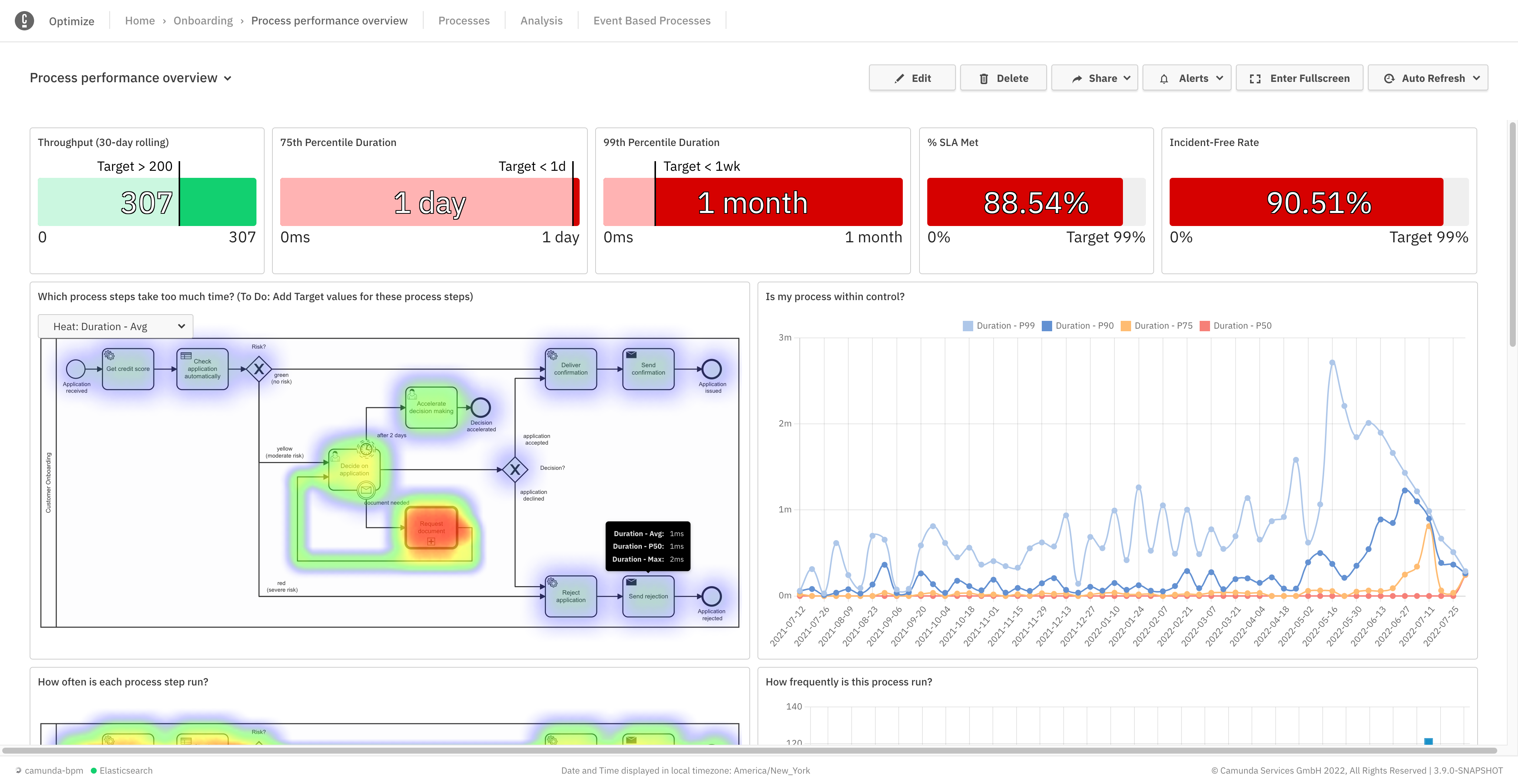 |