
Sunny Hemnani
Senior Software Engineer
Chose Camunda
Pega Client Lifecycle Management

| Product | Rating | Most Used By | Product Summary | Starting Price |
|---|---|---|---|---|
 Camunda | N/A | Camunda is a process orchestration tool designed to help organizations design, automate, and improve any process. Built for business and IT collaboration using BPMN and DMN standards, Camunda aims to enable seamless integration across endpoints to transform mission-critical processes. | N/A | |
 UiPath Integration Service | N/A | UiPath Integration Service (including technology from Cloud Elements, following UiPath's acquisition of the company in 2021) is a cloud API integration service that uses cooperative apps to connect an organization’s customers, partners and employees to the cloud services they use. The vendor says that by using their pre-built elements, their one-to-many approach connects applications with services, each through a single API. The organization’s app can instantly share data with other applications… | N/A |
| Camunda | UiPath Integration Service | |||||||||||||||
|---|---|---|---|---|---|---|---|---|---|---|---|---|---|---|---|---|
| Editions & Modules |
| No answers on this topic | ||||||||||||||
| Offerings |
| |||||||||||||||
| Entry-level Setup Fee | No setup fee | No setup fee | ||||||||||||||
| Additional Details | — | — | ||||||||||||||
| More Pricing Information | ||||||||||||||||
| Camunda | UiPath Integration Service | |
|---|---|---|
| Considered Both Products |  Camunda Sunny Hemnani Senior Software Engineer Chose Camunda Pega Client Lifecycle Management  Scott Francis Founder and CEO Chose Camunda They're just different products with different target audiences. In different ways, IBM and Pega have offerings that are meant to serve processes in a platform-centric approach to their customers. An emphasis on unified development environments, including forms building, … | UiPath Integration Service  Rajiv Ramanan Head - marketplace business and tech partnerships Chose UiPath Integration Service Multi-touch point integrations and developer friendly. More expensive but better features.  Erik Ralston Chief Architect Chose UiPath Integration Service MuleSoft is also a similar product to Cloud Elements, but is not available as an option in this form.
Workato and MuleSoft are competing cloud API connector platforms that perform a similar function to Cloud Elements. We chose Cloud Elements over them because CE provided a … |
| Camunda | UiPath Integration Service | ||||||||||||||||||||||||
|---|---|---|---|---|---|---|---|---|---|---|---|---|---|---|---|---|---|---|---|---|---|---|---|---|---|
| Customization |
| ||||||||||||||||||||||||
| Reporting & Analytics |
| ||||||||||||||||||||||||
| Process Engine |
| ||||||||||||||||||||||||
| Business Process Automation |
|
| Camunda | UiPath Integration Service | |
|---|---|---|
| Small Businesses |  CMW Platform Score 8.9 out of 10 |  Make Score 8.9 out of 10 |
| Medium-sized Companies |  Quixy Score 9.9 out of 10 |  IBM App Connect Score 9.5 out of 10 |
| Enterprises |  Redwood RunMyJobs Score 9.6 out of 10 | IBM App Connect Score 9.5 out of 10 |
| All Alternatives | View all alternatives | View all alternatives |
| Camunda | UiPath Integration Service | |
|---|---|---|
| Likelihood to Recommend | 9.0 (0 ratings) | 8.6 (0 ratings) |
| Support Rating | 8.0 (0 ratings) | - (0 ratings) |
| Camunda | UiPath Integration Service | |
|---|---|---|
| Likelihood to Recommend |
 Animesh Kumar Senior Member of Technical Staff |
|
| Pros |
|
|
| Cons |
Animesh Kumar Senior Member of Technical Staff |
|
| Support Rating |
Scott Francis Founder and CEO | No answers on this topic |
| Alternatives Considered | Sunny Hemnani Senior Software Engineer |
Erik Ralston Chief Architect |
| Return on Investment |
Scott Francis Founder and CEO |
|
| ScreenShots | Camunda Screenshots  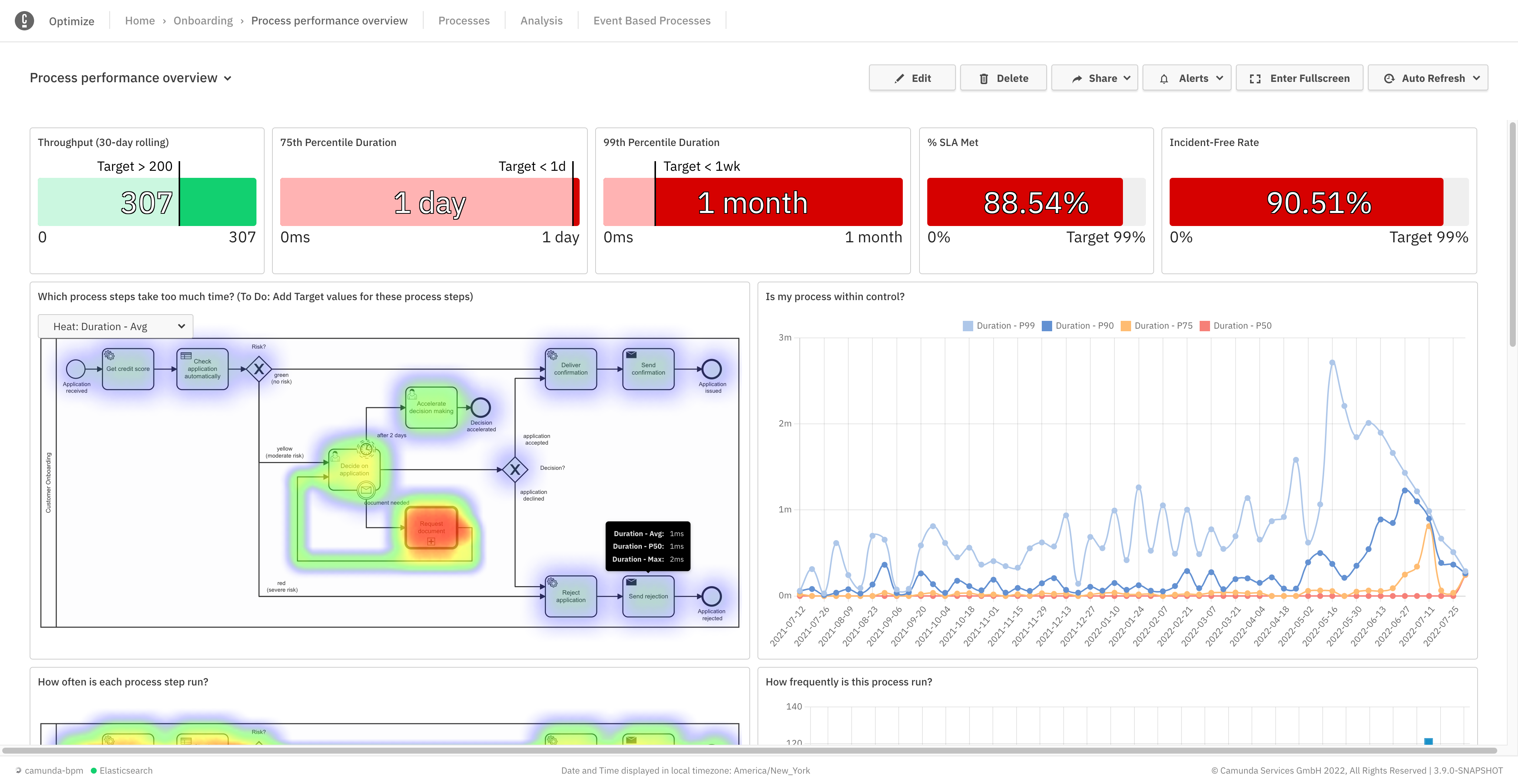 |