
Sunny Hemnani
Senior Software Engineer
Chose Camunda
Pega Client Lifecycle Management

| Product | Rating | Most Used By | Product Summary | Starting Price |
|---|---|---|---|---|
 Camunda | N/A | Camunda is a process orchestration tool designed to help organizations design, automate, and improve any process. Built for business and IT collaboration using BPMN and DMN standards, Camunda aims to enable seamless integration across endpoints to transform mission-critical processes. | N/A | |
 Zapier | N/A | The Zapier Automation Platform designed to integrate data between web apps. It is scaled for small to mid-sized businesses, with a functional but limited free version of the program. | $29.99 per month 750 tasks per month |
| Camunda | Zapier | |||||||||||||||
|---|---|---|---|---|---|---|---|---|---|---|---|---|---|---|---|---|
| Editions & Modules |
|
| ||||||||||||||
| Offerings |
| |||||||||||||||
| Entry-level Setup Fee | No setup fee | No setup fee | ||||||||||||||
| Additional Details | — | 33% discount for annual pricing. | ||||||||||||||
| More Pricing Information | ||||||||||||||||
| Camunda | Zapier | |
|---|---|---|
| Considered Both Products |  Camunda Sunny Hemnani Senior Software Engineer Chose Camunda Pega Client Lifecycle Management  Scott Francis Founder and CEO Chose Camunda They're just different products with different target audiences. In different ways, IBM and Pega have offerings that are meant to serve processes in a platform-centric approach to their customers. An emphasis on unified development environments, including forms building, … | Zapier  Ramón Carmona Medina Co-Founder and CMO Chose Zapier In case of IFTTT at the very begining you could use any of them to solve the same problem but with the time IFTTT became more hardware automation and Zapier more software services automation so eventually I end up moving 100% to Zapier and I still think IFTTT has its own use …  Thomas (TC) Riley Senior Director, Information Services Chose Zapier We actually utilize both Integromat and Zapier at our company, for all the reasons detailed in this review. Though Zapier is excellent for simple client integrations, we often run into internal use cases that require complexity that Zapier cannot provide. Specifically working …  Samantha Crawford Owner Chose Zapier Similar--free and paid accounts, both suitable for small businesses and sole proprietors. Similar apps also allow you to set up workflows so when a specific action is taken, a followup action is then taken. Works wonderfully and really helps save time on a day-to-day basis. It …  Matthew Smith Head Of School Chose Zapier I’ve used the free version of Hootsuite. I think this program is a more robust program once you pay for its features. Zapier is still better as a free version. So if you are looking to round out your digital presence with little investment go with Zapier. If you’re trying to …  Omar Abdelrehim CEO/President Chose Zapier
 Quentin Aisbett Digital Strategist Chose Zapier Zapier seemed better positioned to do what we need to do from a business perspective. I may be wrong but IFTTT seemed more personal/home use.  James Crook ☛ Business Coach for Massage Therapists ☚ Lead Business Coach for Massage Therapists Chose Zapier I have only tried IFTTT several years ago and at that time Zapier had a much wider range of integrations available. I’m not aware of there are any competitors that are at the same level.  Len Nevin Founder Chose Zapier I have used PieSync and Zapier was much easier to use for me.  Mohamed Jemaa Senior Marketing Manager Chose Zapier I am currently using Zapier and it became for us a must have tool that make us win a lot of time .  Omri Friedel - CPA, CA Head of Finance and Operations Chose Zapier We started out very quickly with Zapier, and it worked very well for us an organization, and have simply scaled on that specific platform. While we have used and tested some others, we decided at the end to stay with Zapier due to the extent of adoption across the … Chose Zapier Zapier is by far the best of any services like that I've seen. I really do recommend it to every small business I know!  Malessa Brisbane Web Marketing Consultant Chose Zapier I found Zapier easier to use, and it had more integrations for the apps that I use.  Andy Abramson CEO and Founder Chose Zapier Zapier is better but Tray had the ability to be more customizable. |
| Camunda | Zapier | ||||||||||||||||||||||||
|---|---|---|---|---|---|---|---|---|---|---|---|---|---|---|---|---|---|---|---|---|---|---|---|---|---|
| Customization |
| ||||||||||||||||||||||||
| Reporting & Analytics |
| ||||||||||||||||||||||||
| Process Engine |
| ||||||||||||||||||||||||
| Business Process Automation |
| ||||||||||||||||||||||||
| Cloud Data Integration |
|
| Camunda | Zapier | |
|---|---|---|
| Small Businesses |  CMW Platform Score 8.9 out of 10 |  Make Score 8.9 out of 10 |
| Medium-sized Companies |  Quixy Score 9.9 out of 10 |  IBM App Connect Score 9.5 out of 10 |
| Enterprises |  Redwood RunMyJobs Score 9.6 out of 10 | IBM App Connect Score 9.5 out of 10 |
| All Alternatives | View all alternatives | View all alternatives |
| Camunda | Zapier | |
|---|---|---|
| Likelihood to Recommend | 9.0 (0 ratings) | 9.3 (0 ratings) |
| Likelihood to Renew | - (0 ratings) | 10.0 (0 ratings) |
| Usability | - (0 ratings) | 9.0 (0 ratings) |
| Support Rating | 8.0 (0 ratings) | 1.0 (0 ratings) |
| Camunda | Zapier | |
|---|---|---|
| Likelihood to Recommend |
 Animesh Kumar Senior Member of Technical Staff |
|
| Pros |
|
Omri Friedel - CPA, CA Head of Finance and Operations |
| Cons |
Animesh Kumar Senior Member of Technical Staff |
|
| Likelihood to Renew | No answers on this topic |
Malessa Brisbane Web Marketing Consultant |
| Usability | No answers on this topic |
|
| Support Rating |
Scott Francis Founder and CEO |
 David Hoffman Director of Marketing |
| Alternatives Considered | Sunny Hemnani Senior Software Engineer |
Thomas (TC) Riley Senior Director, Information Services |
| Return on Investment |
Scott Francis Founder and CEO |
Omar Abdelrehim CEO/President |
| ScreenShots | Camunda Screenshots  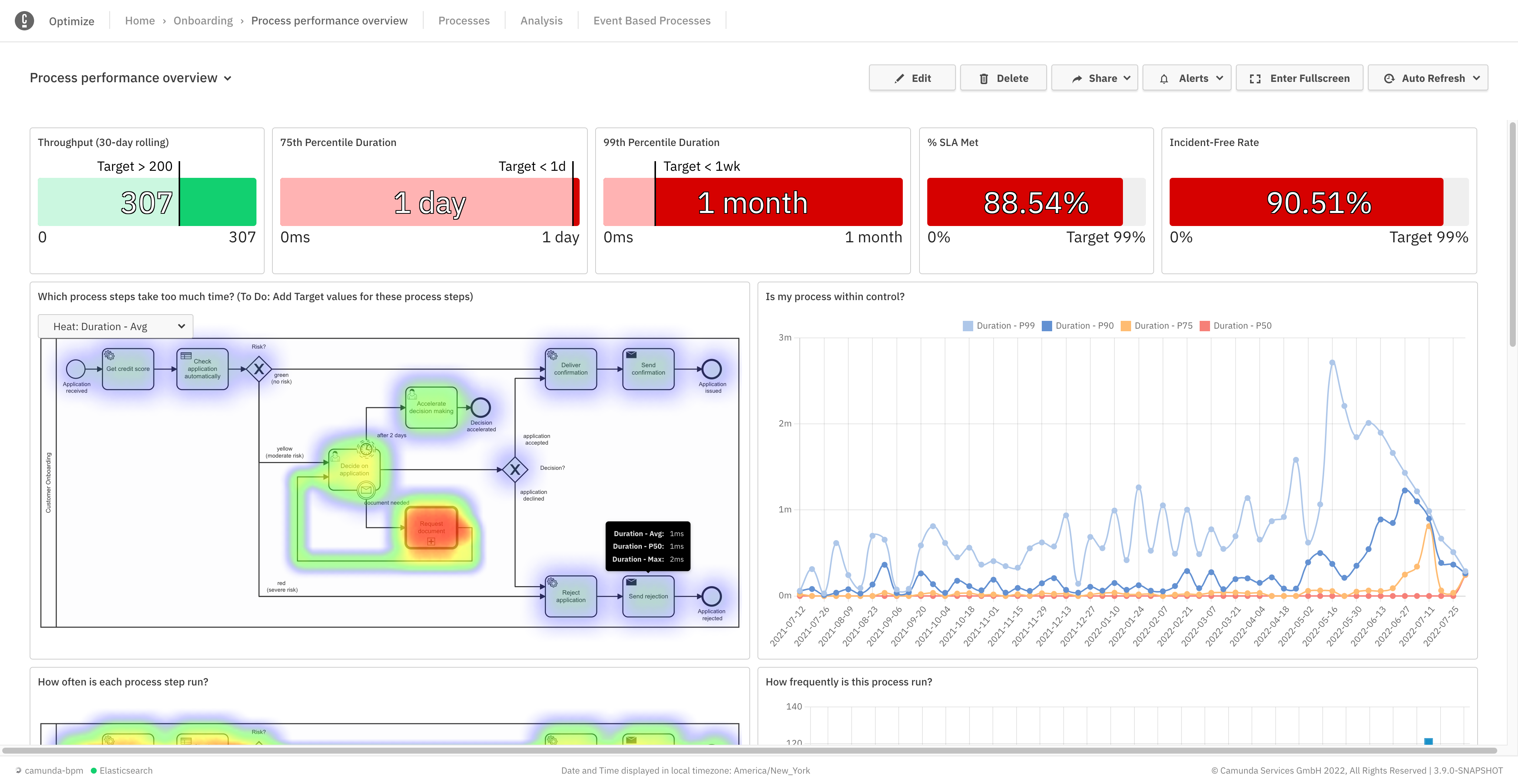 |
