dbt is an SQL development environment, developed by Fishtown Analytics, now known as dbt Labs. The vendor states that with dbt, analysts take ownership of the entire analytics engineering workflow, from writing data transformation code to deployment and documentation. dbt Core is distributed under the Apache 2.0 license, and paid Teams and Enterprise editions are available.
N/A
Qlik Replicate
Score 8.4 out of 10
N/A
Qlik Replicate enables organizations to accelerate data real-time replication, ingestion and streaming via change data capture, across a wide range of heterogeneous databases, data warehouses and data lake platforms.
N/A
Pricing
dbt
Qlik Replicate
Editions & Modules
No answers on this topic
No answers on this topic
Offerings
Pricing Offerings
dbt
Qlik Replicate
Free Trial
Yes
Yes
Free/Freemium Version
Yes
No
Premium Consulting/Integration Services
No
No
Entry-level Setup Fee
No setup fee
Required
Additional Details
—
—
More Pricing Information
Community Pulse
dbt
Qlik Replicate
Features
dbt
Qlik Replicate
Data Transformations
Comparison of Data Transformations features of Product A and Product B
dbt
9.5
Ratings
15% above category average
Qlik Replicate
-
Ratings
Simple transformations
10.00 Ratings
00 Ratings
Complex transformations
9.00 Ratings
00 Ratings
Data Modeling
Comparison of Data Modeling features of Product A and Product B
dbt (Data Build Tool) is best suited for doing the data transformation. dbt is just a transformation tool and it is not suitable for building a data pipeline which requires extraction of data and loading. dbt is well suited for SQL based transformation logic and it is less appropriate when transformation logic requires python.
Qlik Replicate works very well with relational data platforms, both on premise and in the cloud, for example Oracle, SQL Server, PostgreSQL, MySQL and others, it also works very well with DB2. If the data source is MongoDB, it is more complicated and currently there is no possibility of sending data to MongoDB.
Qlik Replicate brought a great experience with respect to the ease of implementation and great UI. We had a software that was a blackbox for the team and was very hard to maintain. Qlik Replicate implementation helped us avoid dependency on one resource.
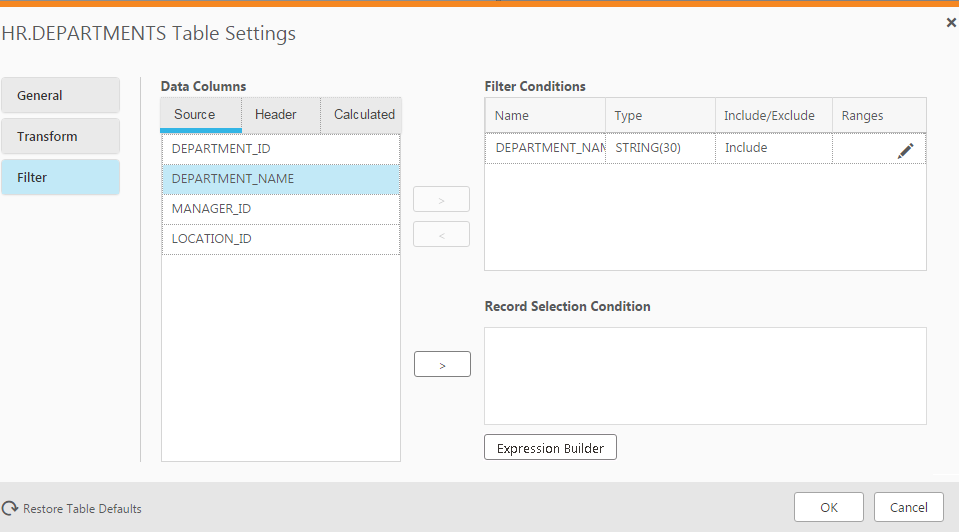
Global transformation and in-built functions are what I like in our project.
You can customize the conversion/transformation using a JSON file generated by Qlik Replicate, and it is very convenient.
Slow load times of the dbt cloud environment (they're working on it via a new UI though)
More out-of-the-box solutions for managing procedures, functions, etc would be nice to have, but honestly, it's pretty easy to figure out how to adapt dbt macros
The base Replicate web GUI is lacking. If you have dozens or more tasks, it's hard to get a sense of how they're performing. Enterprise Manager solves all of these problems but is a separate install.
The support portal is extremely difficult to navigate. It's hard to track down exactly what you're looking for.
It would be helpful to have better documentation and example queries for the tables in the Enterprise Manager analytics database.
Destination databases that don't support common DDL commands behave unpredictably. And the replication of schema changes isn't consistent.
The availability of the replicated data in disparate environments has is now crucial. Replacing a product like Qlik Replicate would require significant time, investments, and work. In addition, Qlik Replicate is reasonably reliable with few failures.
dbt is very easy to use. Basically if you can write SQL, you will be able to use dbt to get what you need done. Of course more advanced users with more technical skills can do more things.
We now have greater business flexibility and scalability, and our big data integration projects have a quick rate of growth, which has been profitable for us. Independent of the sources involved, maintaining data consistency between sources is easy. One of my favorite features is the way it lets owners of the source system start and stop processes from updating their system windows.
The issue I've had is that Qlik does an awful job of keeping their customers informed when new versions of the software are available. We found that we were using a version that was no longer supported and could never get help. When it came time to get us upgraded so that we were on a current version, no one knew how to help get us to where we needed to be. We had to purchased professional services time and even then I was basically on my own to get everything built out and set up. Qlik needs to be more proactive with communicating about new releases and how to get your version upgraded in the most secure, safe way possible.
Follow the directions from the Qlik documentation. They are pretty straight forward and easy enough to follow. If you follow these, then you are not likely to have issues on implementation.
Matillion is graphical versus dbt, which is SQL code-based (that, of course, is a matter of personal preference and not an objective advantage). The integrated testing, documentation generation, lineage, etc., were additional criteria that led us to choose dbt.
Great tool for data replication solution for Oracle/SQLServers/etc. Real easy to get it set up and start realizing business value. Getting the PoC accomplished in a short window. Product costing and easy to start small and scale as needed. It helped cover most of our ask compared to other solutions.
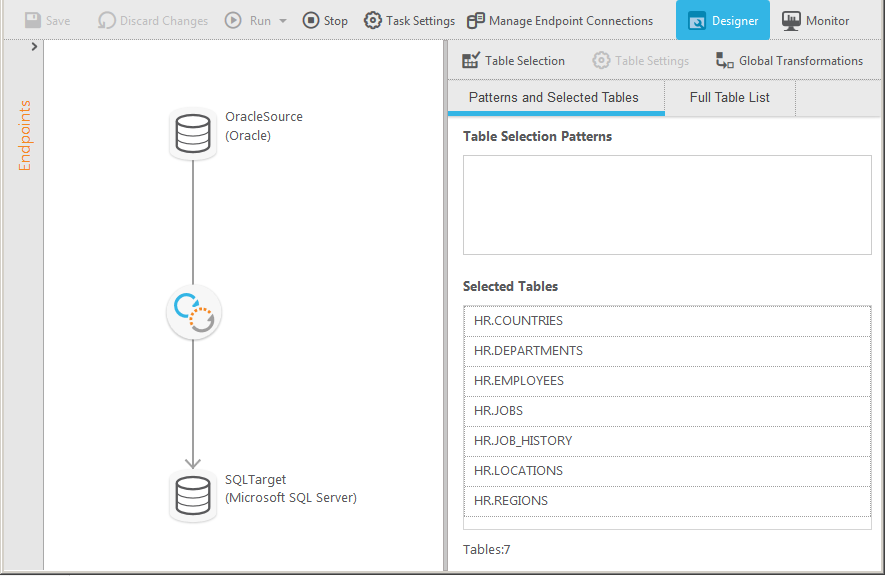
Prior to using Qlik Replicate, we used an ETL solution to copy data from the Oracle ERP system to the Microsoft SQL Server BI system at a 15-minute interval. It was very tedious to maintain. Qlik Replicate is much easier to use and we replicate data near real-time now.