Site24x7 from ManageEngine is a full-stack application, website, server, cloud and network monitoring tool. Site24x7 offers code-level diagnostics and customizable error thresholds, end-to-end monitoring with topology visualization tools, and mobile accessibility.
$9
10 monitors
Microsoft System Center Operations Manager (SCOM)
Score 7.5 out of 10
N/A
Microsoft's System Center Operations Manager (SCOM) is a monitoring and application performance management option, with the core datacenter and cloud-based systems monitoring.
N/A
Pricing
ManageEngine Site24x7
Microsoft System Center Operations Manager (SCOM)
Editions & Modules
Starter
$9.00
10 monitors
Pro
$35.00
40 Monitors
Classic
$89.00
100 Monitors
Elite
$225.00
250 Monitors
Enterprise
$449.00
500 Monitors
Enterprise Plus Web
$899.00
2500 Monitors
No answers on this topic
Offerings
Pricing Offerings
ManageEngine Site24x7
Microsoft System Center Operations Manager (SCOM)
Free Trial
Yes
No
Free/Freemium Version
Yes
No
Premium Consulting/Integration Services
No
No
Entry-level Setup Fee
$1 monitors
No setup fee
Additional Details
Each Pack will also support additional benefits such as Network interfaces, Applogs, Alert credits etc. You can also, purchase add-ons to create custom pricing options. Please visit the vendor's pricing page, for more information.
—
More Pricing Information
Community Pulse
ManageEngine Site24x7
Microsoft System Center Operations Manager (SCOM)
Considered Both Products
ManageEngine Site24x7
Verified User
Anonymous
Chose ManageEngine Site24x7
Site24x7 [All-in-One Monitoring] has some similarities to ThousandEyes. Especially in the troubleshooting aspect where both offer Web performance waterfall charts to analyze the issue better. Both have cloud-based servers globally that allow to determine performance on the …
Manage engine had OPs manager for alerting and security monitoring alerts, but is just not as robust an offering as [Site24x7 All-in-One Monitoring] (RUM.APM features etc..). Originally we had used Nagios on low, to no-cost linux platform, but Nagios will require license also, …
Initially, it came down to price. But, if you don't mind having a cloud monitoring solution (versus on-prem) then in my opinion Site24x7 is much easier to setup/manage/configure/use than other options I have managed in the past. Adding monitors takes seconds and I spend almost …
The biggest difference between Site24x7 and products like PRTG, Nagios, or Icinga, is that Site24x7 is hosted off the network, completely externally. The others do a great job on network alerts-- and some can even be configured to send SMS or phone calls with the right …
Each solution excels in their own areas. Site24x7 provides the easiest and most cost-effective transactional monitoring from the previous and existing solutions which we use. However, Solarwinds Orion suite, which includes the virtualization manager, gives us full-stack …
I haven't had a lot of experience evaluating Datadog but from the research and basic demo that we got I understand that it is significantly more expensive, but it does seem to have more AI features and can assist in predicting when/if applications or essential services may go …
site24x7 is really unique, I have been using it for many years and always recommend it in my classes. It is ideal for monitoring all web, apps, servers together in one place. Never let a website go down again.
I selected this [roduct because I needed something really quick to deploy and that we could easily integrate with our environment without having to deal with firewall setup and other stuff.
Simply put, Alertsite from Smartbear is a great product, with top-notch functionality. However, the cost of the platform when using multi-step transactions is incredibly pricey and the cost does not scale well when you want to increase your monitoring. Site24x7 alleviates the …
While Applications Manager and CA CEM can give a deep understanding of the services and applications, neither can compare with the shear speed at which Site24x7 can provide for the web performance of sites and how customer satisfaction is associated as well!!!
Chose Microsoft System Center Operations Manager (SCOM)
The capability of SCOM as far as monitoring Windows systems is concerned is far greater than any monitoring product out there as both are a Microsoft product so integration and discoveries work well and fast.
Chose Microsoft System Center Operations Manager (SCOM)
This was used to monitor uor non-Windows systems and was cumbersome. Their licensing was per device with how many agents you needed; however, with System Center Operations Manager, their billing was a lot easier for their product.
Chose Microsoft System Center Operations Manager (SCOM)
All comparative features are way expensive and complex to configure in all other competitors. Value to money and ease of deployment for Microsoft based environment
Chose Microsoft System Center Operations Manager (SCOM)
SCOM is better than OMi for Windows-based servers monitoring. You need to know how to use Visual Studio to customize the management pack. Dynatrace is way better for all Application Performance Manager.
Chose Microsoft System Center Operations Manager (SCOM)
It is an excellent product for monitoring features like Exchange, Active Directory, DNS. Monitors are custom designed and can be adjusted to any system. Great monitors can be created even when monitoring open-source systems.
Chose Microsoft System Center Operations Manager (SCOM)
SolarWinds stacks well on the ease of use with an easily installable version and highly modular (products can be added to the basic installation and are easily managed from a single endpoint. System Center Operations Manager was selected because the majority of the environment …
Chose Microsoft System Center Operations Manager (SCOM)
We didn't consider any other alternatives, nor did we try or demo any other product prior to our purchase of SCOM. I know there are several other products out that perform many of the same functions and more such as SolarWinds, however, those products are pricey as well and we …
Chose Microsoft System Center Operations Manager (SCOM)
HP SiteScope is truly an agentless solution, with all the limitations of such approach, SCOM also has limited functionality for agentless monitoring, but you always can switch to agent-based configuration in SCOM, but not in SiteScope. Datadog is a good cloud-based monitoring …
Chose Microsoft System Center Operations Manager (SCOM)
Our organization currently uses Nagios and while it is a much cheaper alternative, you just don't get the features and capabilities that SCOM offers. Nagios seems to be limited to basic monitoring and alerts. SCOM is tailored to our TFS environment out of the box with the TFS …
Chose Microsoft System Center Operations Manager (SCOM)
We used Altiris and WSUS and in the beginning Altiris had the better admin interface than SCOM, but it is no longer the case as SCOM has refined their admin interface. Altiris still has better and more robust group assignments for management roles and those two other tools can …
Chose Microsoft System Center Operations Manager (SCOM)
The monitoring market is a really crowded one. While I think SCOM is the best solution for Microsoft-centric scenarios, competitors like Nagios or Tivoli may fit better for different expectations. Some companies with specific objectives (like ITIL management) could be pushed to …
Chose Microsoft System Center Operations Manager (SCOM)
We only had What's Up Gold in the past. What's Up Gold could not monitor services or performance of a server. It only would ping for up and down and we also used it for some SNMP monitoring with printers. SCOM had more features and was a more robust solution.
Chose Microsoft System Center Operations Manager (SCOM)
SCOM naturally competes with other monitoring products on the market. It's obvious, that monitoring products, such as SQLSentry ot RedGate SQL Monitor can do specific workload monitoring better, but when you need to have centralized monitoring solution - SCOM is the best! …
Chose Microsoft System Center Operations Manager (SCOM)
I strongly believe, SolarWinds is the leader in monitoring and managing everything/anything network related, not saying Microsoft can't develop SCOM to beat SolarWinds, but Microsoft really needs to step back and figure out how far they want to take SCOM and what's the end goal …
Chose Microsoft System Center Operations Manager (SCOM)
SolarWinds Application and Server monitoring is the right choice for many organizations. However, it does not provide the flexibility of monitoring that System Center Operations Manager provides. Smaller organizations might want to consider SolarWinds for application and server …
I have tried other tools (PRTG etc) in the past, and switched from US monitor to [Site24x7 All-in-One Monitoring], for all the built-in features and ability to implement by using with or without the agents deployed (ip discovery LAN). This is one tool that encompasses the entire organization and allows that single pane of glass feel (NOC screen view) for an accurate virtual snapshot of your entire organization, either cloud and/or LAN.
Well suited for IT Departments that can budget the funds and time needed for setup and maintenance of SCOM. The end product is well suited for medium to large environments that have 100's of resources that require monitoring and reporting. Enterprise level statistics are at your fingertips with a few clicks of a mouse after the product has been configured and agents have been deployed. As I said previously, we are a small business and I was fortunate enough to be able to budget this product into our environment. It did take us a while to configure and fully deploy, but as a result, we are well-informed and are able to extract detailed information as it pertains to usage/consumption of our workstation and server resources to include performance metrics and any errors that may arise.
Alerts: Site24x7 can be configured to send alerts in all sorts of ways, from email, to text messages, to even direct automated phone calls.
Internal monitoring: An agent installed on one or more machines can monitor internal connectivity to other network devices. This means if connectivity to a server goes down, we often know about it before users alert us.
External monitoring: Site24x7 also watched our websites and sends alerts if they're unreachable. It uses multiple locations to do so, which means if there's a partial network outage in some part of the country, we know who is affected.
SCOM can manage Windows OS systems from desktops to servers very well.
SCOM is platform agnostic in that we manage physical and virtual machines with no differentiation.
SCOM can quickly deploy emergency security patches and the best part is it can provide detailed results of success and failure rate of patch deployment.
It is a monster of a system and really needs a person managing the system full time
Options are a bit clunky especially when you need to set overrides.
Takes a lot of time and effort to setup alerts as you want them, don't rely on the out of the box options you need to invest time into the system to get what you want out of it.
Make sure you size the underlying database server/s correctly (Microsoft provide a tool to calculate based on number of objects you plan to collect data on), it is a datawarehouse underneath after all.
I have only had to use support once, so I can't go into much detail about their support team. The one time I did use it the response was fast but the resolution took some time.
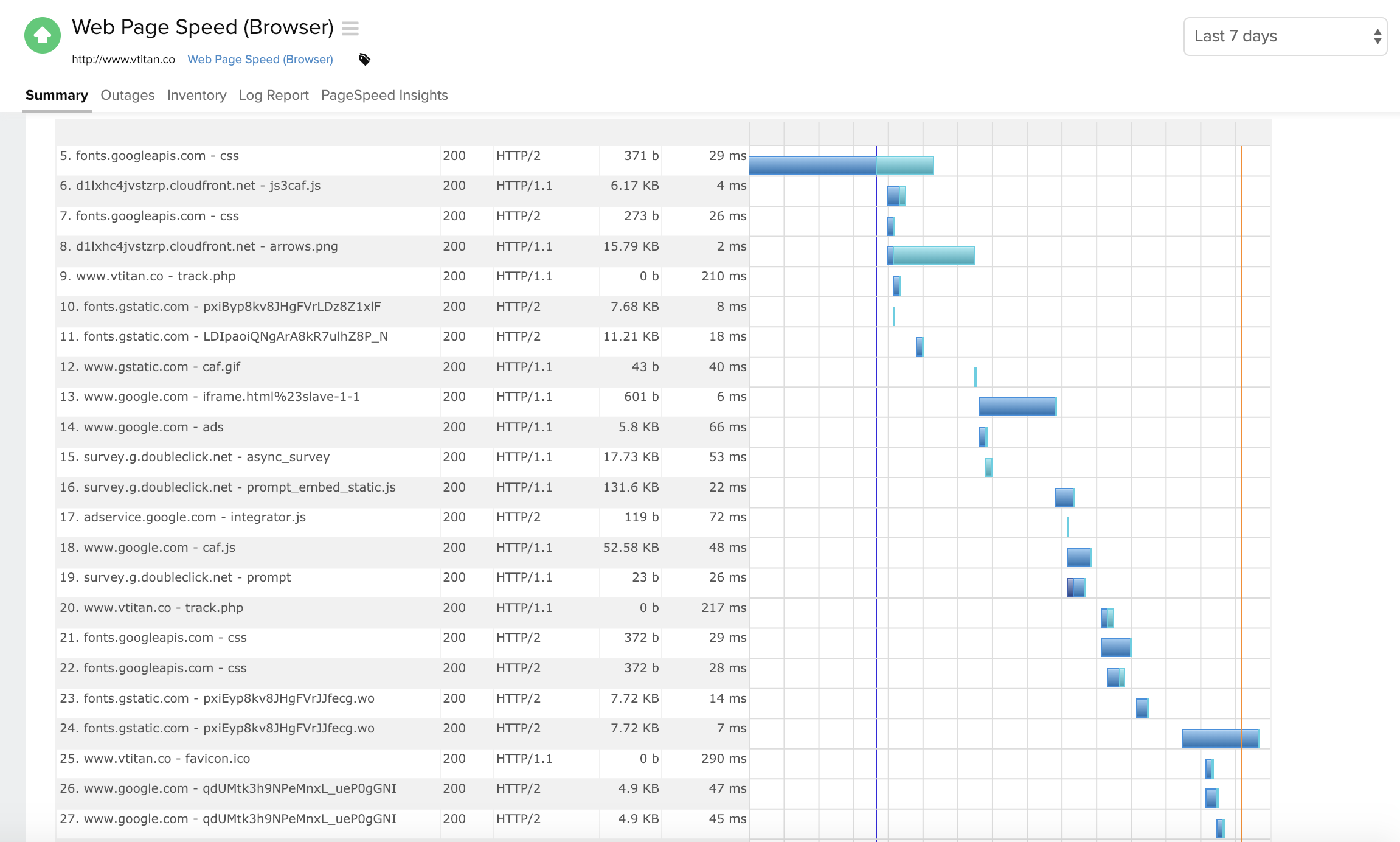
Site24x7 [All-in-One Monitoring] has some similarities to ThousandEyes. Especially in the troubleshooting aspect where both offer Web performance waterfall charts to analyze the issue better. Both have cloud-based servers globally that allow to determine performance on the Internet. Site24x7 has more features available so we selected it instead.
SolarWinds stacks well on the ease of use with an easily installable version and highly modular (products can be added to the basic installation and are easily managed from a single endpoint. System Center Operations Manager was selected because the majority of the environment is based on Windows products and it was part of the licensing agreement. It offered an easy way to consolidate the monitoring tools to provide a single point of management.
Positivity wise, we're spending a third of what we were on our website monitoring, this has allowed us to focus funding elsewhere (namely SolarWinds).
We have enhanced our core monitoring by now also being able to provide better coverage, whereas we were handicapped with our previous supplier due to the scaling costs of multi-step transactions.
The general feeling from our IT staff is that the platform is not great, which obviously reduces confidence in the ability for the platform to provide accurate monitoring data for our websites.
Since we are at the tail end of our POC, we have no immediate ROI to report.
That said, during the POC, we immediately identified several issues within TFS that we immediately addressed and will potentially save us hours of lost time and troubleshooting.