Miro empowers cross-functional teams to flow from early discovery through final delivery on a shared, AI-first canvas. With the canvas as the prompt, Miro’s AI capabilities keep teams in the flow of work, and scale shifts in ways of working.
$0
SAP Signavio Process Transformation Suite
Score 7.7 out of 10
N/A
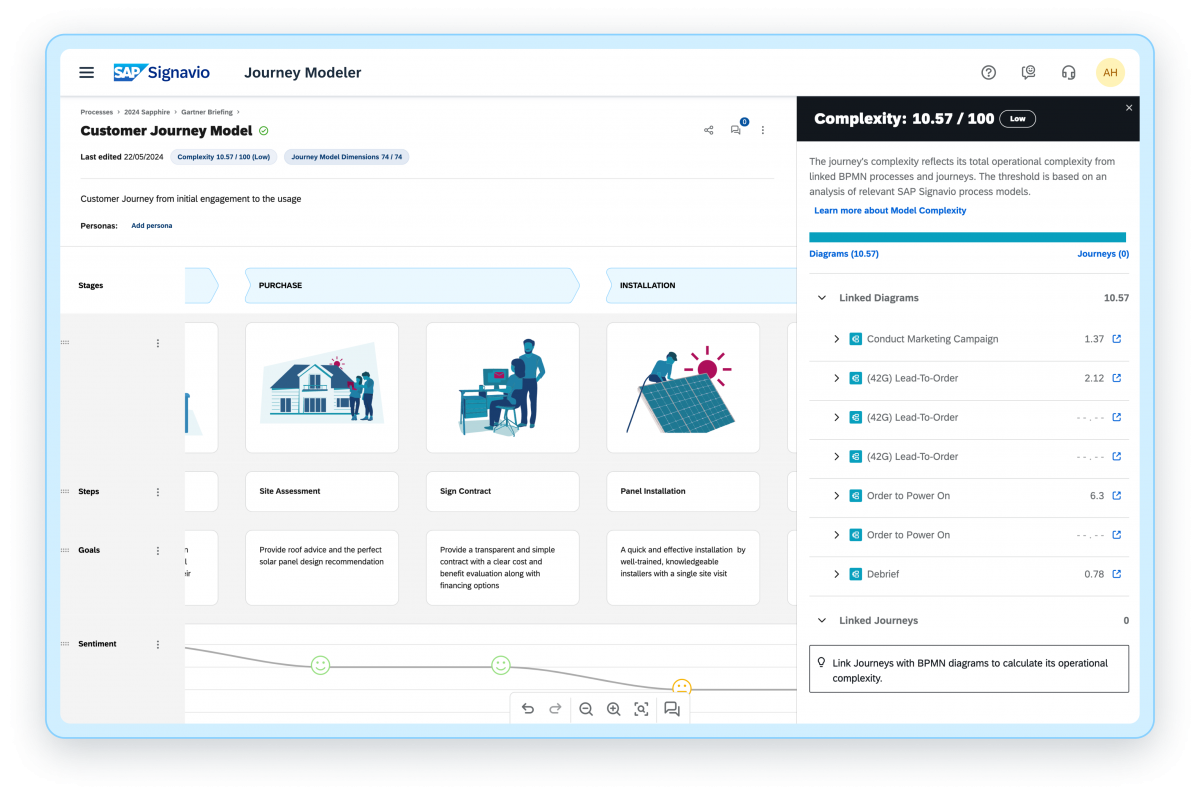
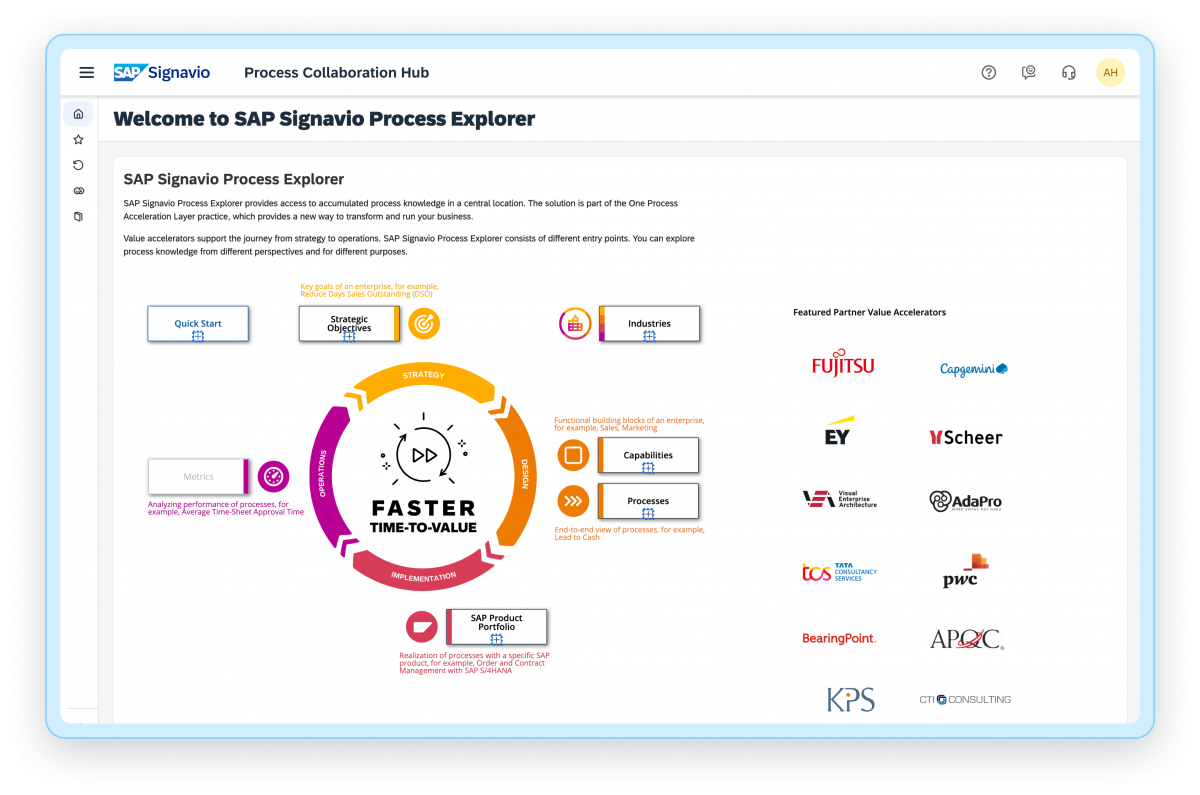
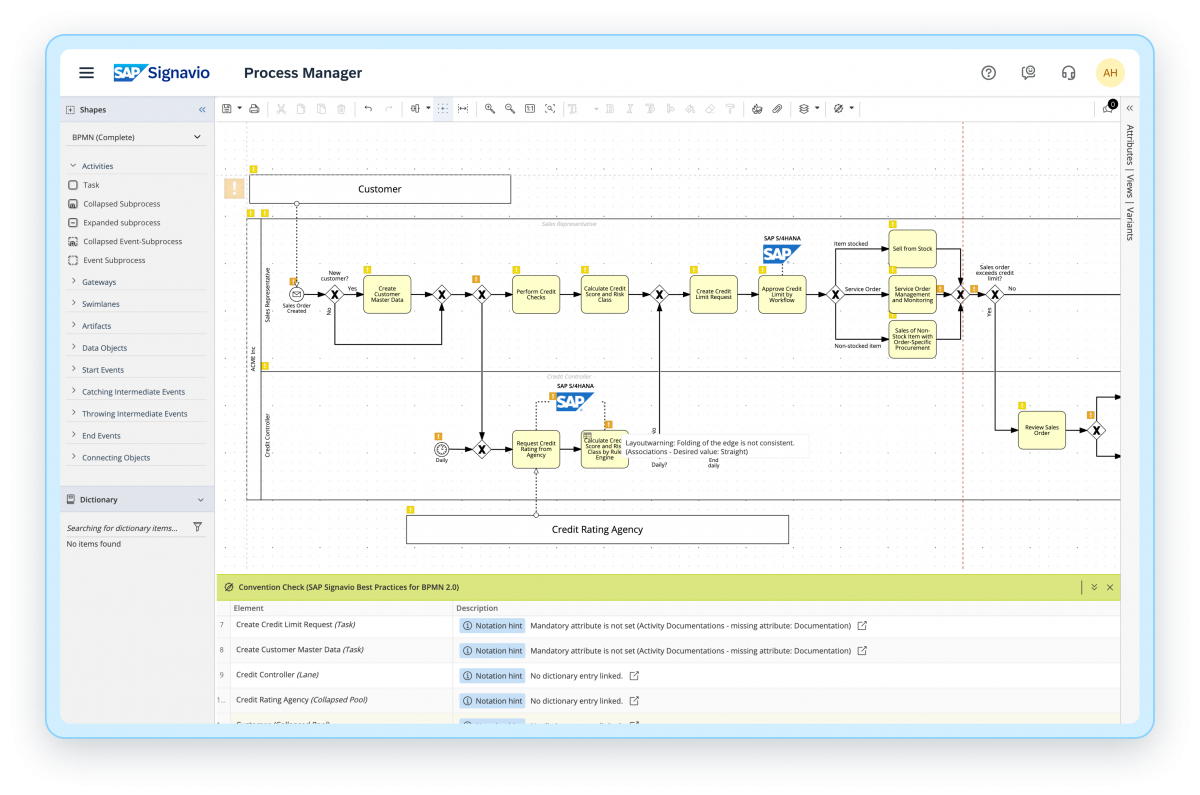
The SAP Signavio portfolio offers an integrated platform that helps usersto realign the organization and bring changes, with a suite of products that support business processes. The SAP Signavio portfolio offers a range of business transformation solutions to serve the emerging practice of customer excellence (CEX). SAP Signavio solutions bring together a full 360-degree view of outside-in and inside-out thinking, translating experiences into operational reality by putting the customer at the…
N/A
Pricing
Miro
SAP Signavio Process Transformation Suite
Editions & Modules
1. Free - To discover what Miro can do. Always free
$0
2. Starter - Unlimited and private boards with essential features
$8
per month (billed annually) per user
3. Business - Scales collaboration with advanced features and security
$16
per month (billed annually) per user
4. Enterprise - For work across the entire organization, with support, security and control, to scale
contact sales
annual billing per user
No answers on this topic
Offerings
Pricing Offerings
Miro
SAP Signavio Process Transformation Suite
Free Trial
Yes
Yes
Free/Freemium Version
Yes
No
Premium Consulting/Integration Services
No
No
Entry-level Setup Fee
Optional
Optional
Additional Details
Monthly billing also available at $10 per month for the Starter plan, or $20 for the Business plan.
Miro is the more collaborative option, offering the ability for many individuals to work on the same item real-time. Though it does create some duplicate entry, we've found this added cost is minimal compared to the opportunity cost of lost collaboration.
Earlier we were using different products for different requirements, such as Microsoft whiteboard, lucidcharts for diagrams. But as Miro has all these features and other additional features which makes it "all in one place" and enable us to save out time which earlier was …
Miro is great for collaborating. I think it definitely is better than Mural and Jamboard because it has more features and it's easier to use. Compared to FigJam, as a designer I would probably choose Figjam to have everything in the same product. However, in my opinion, Miro …
We ran a business case analysis for these, and they didn't come close. Visual omnipresent collaboration is a must; list of different features is way longer in Miro; Kanban and its views is less clunky and requires less fiddling out of the box — Trello needed to be set up …
Miro was a big hit with all the teams involved, it was easy to stand up and start using, easy to license, and easy to manage. Other tools offered stronger connections to tools in their product suite without the freedom and ease of use that Miro did.
I was a while ago that I use Mural. At that stage the features where similar. However, Miro has developed at a very quick pace and is always adding features to improve the product, so I have had no reason to look elsewhere.
I think they all have very good features and are similar to a certain extent, however, Miro includes all the interactive features and allows you to create without limitations on format or page sizes, or oversaturation of users within the same session, which is why I appreciate …
Miro basically cover the needs of all the other tools. I started using Miro extensively during the pandemic and at that point only Jamboard provided similar options and was free when collaborating in a bigger group and when not everyone had a license. This is still the main …
As I've mentioned, I've used Figjam before. Figjam is better for more detailed and design based ideation workshops. But Miro is better for people without much tech ability.
We assessed these tools to gain a better understanding because they are excellent and have certain unique features. But in the end, we chose Miro since it offers all the features that ClickUp, Stormboard, and Conceptboard do. Additionally, it has a special feature that lets you …
We tested every product, but the biggest problem we encountered was that most of them required plugins in order to centralize all of our work. Other problems included the products' excessive price, which was higher than Miro's. Last but not least, Miro offered us an all-in-one …
In my opinion, Microsoft White Board does not compare. So much lag, much more limited functionality (ability to customize visuals and text), no ability to lock content, etc. Mural I haven't used as much. Probably closer in competition to Miro - felt pretty similar. Miro I …
FigJam is particularly tailored for design led product teams so lack the versatility which Miro provides Better for workshop facilitation but clucky UI
Jira is actively used in conjunction with Miro to track activities, and it offers functionalities that differ from Miro. However, it is much easier to create tables and diagrams in Miro. The advantage of Jira is that it enables the management of digital projects more …
I find Miro to be more user-friendly than Figma, where we had a very steep learning curve trying to achieve real-time collaboration with both tech and non-tech users. I haven't personally spent a lot of time using that tool or others, however. At this point, I have a strong …
I reviewed Chelonia as it has a lot of reviews that it is more user friendly than Signavio. I have also seen that it integrates well with UI Path which is helpful with RPA. Ultimately went forward with Signavio due to the cost of Celonis. I hope I made the right decision.
Yes, SAP Signavio Process Transformation Suite is much more advanced and robust tool. While Visio helps visualize process in a good way, it lacks an analysis or reporting feature making it a basic tool.
SAP Signavio Process Collaboration Hub is a standout feature, providing a centralized platform for stakeholders to access, share, and collaborate on process models in real-time. This level of collaboration was superior to what we experienced with other tools such as Lucidchart …
User friendly interface with wide variety of process design and modelling features, which is easy to learn and understand. Plus, it is from a reputed brand SAP, hence clients readily accept this choice of tool for modelling.
Signavio loses in process mining capability against Celonis in many areas like usability and look and feel. Signavio is superior in its BPM related capabilities against e.g. QPR and MS Visio due to its feature set. Against all of them Signavio has better overall solution suite …
The features we knew from Signavio regarding approval workflows were the reason why we considered Signavio as our single source of truth for processes. But the possibilities are much wider. That is what we learned during the last couple of weeks and months during our project. …
Website Support Publicist & and Strategic Communication
Chose SAP Signavio Process Transformation Suite
The application is very simple to use and provides a number of features that allow me to visually represent my thoughts and ideas. Particularly intriguing to me is the potential for real-time collaboration with clients and external partners. This greatly facilitates teamwork …
We were able to end the use of archive versions thanks to SAP Signavio Process Transformation Suite, and everyone has access to the most recent archive. Mac and Windows users can collaborate on a single document. A design tool that spans the concept phase, design phase, and …
We considered a number of comparable solutions, including Lucidchart and Bizagi, before settling on SAP Signavio. Although they have respectable process mapping capabilities, none of these solutions could compare to SAP Signavio's sophisticated process simulation and seamless …
We considered alternatives like Microsoft Visio and Bizagi before deciding on SAP Signavio Process Transformation Suite. Although these technologies have their advantages, SAP Signavio Process Transformation Suite stood out thanks to its user-friendly design, powerful …
Business process management platform, Bizagi, is powerful but often too complex for smaller organizations. This is why our team opted for SAP Signavio, which offers simplicity and ease of use making it a more practical choice. SAP Signavio offers the right balance of features …
I remember a project where all our different teams were involved in it. I created a board with timelines, KPIs, and customer journey stages, and each team added their input live. We were all able to work together in real time, view the entire project, and leave comments without switching apps, which is why it worked fantastically for us. Everyone benefited from the hours of time it saved, and we made a good profit on that project, for which I was named employee of the month.
Pros: 1. It reduces technical debt and accelerates a smooth transition, while harmonizing across data migration regions which replaces the legacy customization that are not for S4/HANA. 2. It cuts operational cost by 30% - 40% and improves SLA adherence, while process intelligence identifies duplicate or redundant approval steps when we know SAP ecosystems ties all modules together for better data insights. Cons: 1. Complicated and costly for small businesses. 2. Mature process required for better data feeding and data insights. 3. If non-SAP system data feed might cause misleading and incomplete data insights
When using the find functionality to locate an item in a Miro board, I do not like that it keeps my previous searched term. Other programs, like Excel, do this but they have it so that you can easily overwrite the previously-searched term.
It would be helpful if you could search by a particular frame, instead of the entire board. For our quarterly backlog review, we often have items that carry over, so there are duplicates on the board. Being able to search by a frame would make this easier.
Understanding who can access a board is not always clear to me.
One small disadvantage is that the mobile app has fewer features than the web interface. It is primarily handy for viewing process maps while on the go.
Another minor drawback is that, based on the complexity of your operations, the process of onboarding and setup may require a considerable amount of time, necessitating several weeks of onboarding activities.
Finally, a handful of the third-party integrations felt functionally tacked on. But, the basic product works flawlessly.
I have advocate for the renew of Miro quite few times, however, it is not under my control as the decision is made in another team with their own budget. I would buy for my own entrepreneur projects (1-2 members) as I do know the value and work there 100%. So, I would pay out of my own pocket to get the value. However, If I wouldn't know the value it provides, it would be hard to decide with the current freemium features
The platform is flexible, easy to use, and simple because Miro is a great visualization tool that makes it easy to collaborate on creating charts. It helps in creating workflows and other designs easily and securely. It supports integrations with major cloud storage solutions and office suites. On top of that, it provides a decent free plan, which is sufficient for basic usage.
I only give a 9/10 because of the speed at which it loads. I have never experienced issues with Miro logging me out early, or some other technical issue causing the program to crash, or even it just loading in perpetuity without ever actually coming up (unlike other programs such as SFDC). It take a minute for all of my boards to come up after I click on it in my favorites, but besides that, it's all good.
Sometimes it gets quite slow and there is a correlation between this and the size of the board. Hence we are trying to segment the boards based on product stages or projects so that the size doesn't go big. When you go from discovery to delivery on a simple board, it will get large and difficult to load, even crash or go white screen
We have never reached out to or contacted support because Miro's platform has been incredibly intuitive and user-friendly. The comprehensive resources available, such as tutorials, documentation, and community forums, have provided all the guidance we needed. The seamless integration with our existing tools and the reliability of the platform have ensured that we rarely encounter issues that require external assistance. This self-sufficiency has allowed us to focus more on our projects and collaboration without interruptions. Overall, our experience with Miro has been smooth and efficient, eliminating the need for additional support
There was a series of webinars which Miro hosted with our organization that went over the basics, then progressively became more advanced with additional sections. The instructors were knowledgeable, and provided examples throughout the sessions, as well as answered peoples' questions. There was ample time and experience on the calls to cover a range of topics. The instructors were also very friendly and sociable, as well as honest. Of course Miro isn't a "God-tool" that does absolutely everything, but the instructors were aware and emphasized the strengths where Miro had them and sincerely accepted feedback.
Easy to learn, Miro has a series of videos on YouTube that effectively taught this program to my team members and me. The program is drag-and-drop and works excellently. People pick up on how to use it efficiently, and it's great for organizing ideas more freely. This product is more challenging for some older audiences who are not accustomed to using a touchpad, but for most, it was very easy to use.
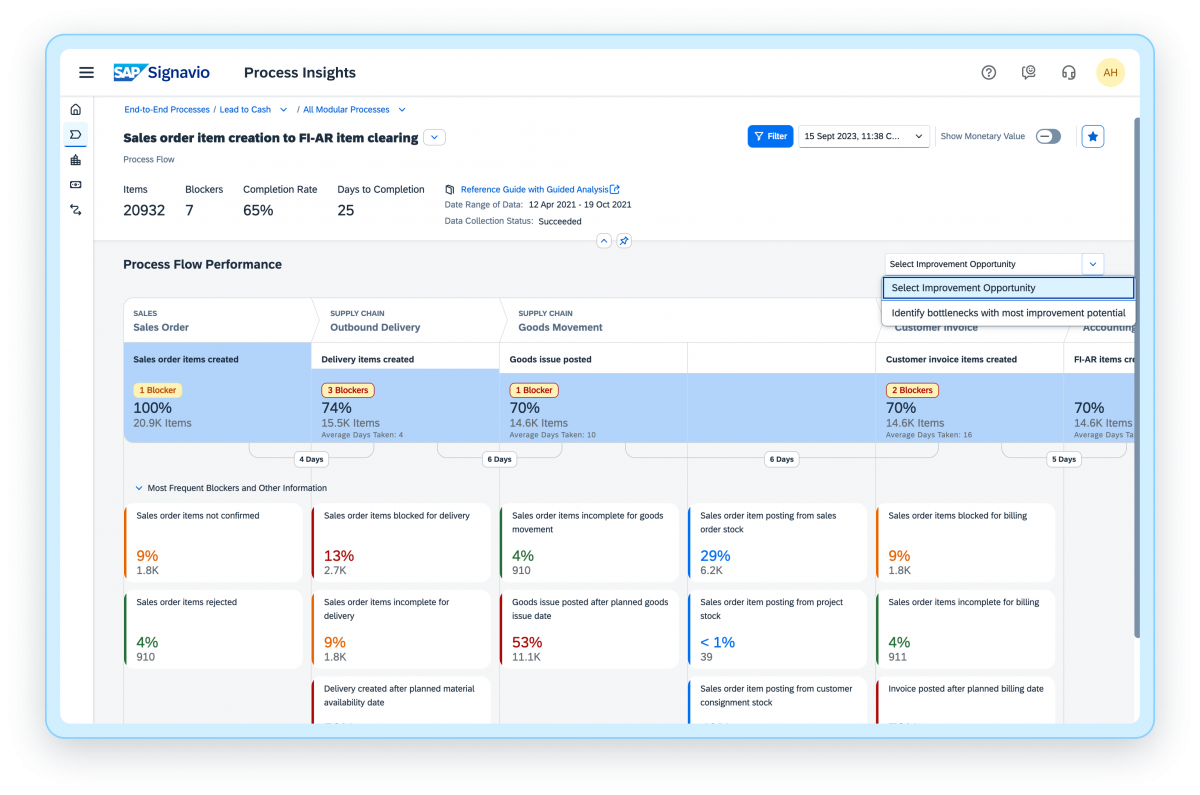
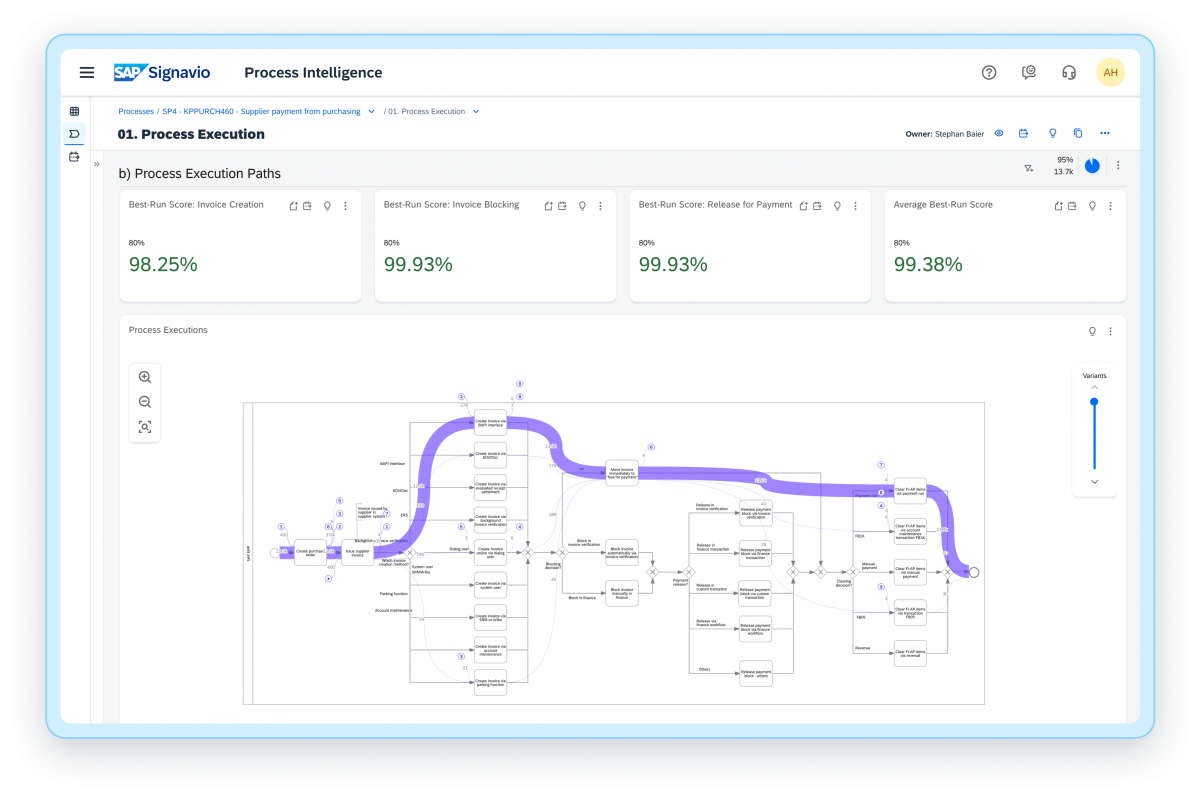
Training is taking way longer than expected. We have had more than 50 hours of training and still do not feel proficient enough to do anything meaningful with Process Intelligence. The Process Insights are pretty intuitive but does take a willingness to dig in and explore, but in general good right out of the box.
Miro is the more collaborative option, offering the ability for many individuals to work on the same item real-time. Though it does create some duplicate entry, we've found this added cost is minimal compared to the opportunity cost of lost collaboration.
The application is very simple to use and provides a number of features that allow me to visually represent my thoughts and ideas. Particularly intriguing to me is the potential for real-time collaboration with clients and external partners. This greatly facilitates teamwork and enables quick response to changes or fresh ideas. Another benefit of SAP Signavio Process Transformation Suite is the large number of applications that can be integrated and the ability to directly transfer concepts, mental maps, and solution blueprints to presentations. I am generally very pleased with SAP Signavio Process Transformation Suite, and I would highly recommend it to any business looking for an effective and user-friendly solution to foster the development of creative ideas and innovative foci
Miro is great for scaling. In every department and subdivision across my entire organization, there is someone using it. From Sales to marketing, to manufacturing and operations; and even in legal and finance, there isn't a process or a department that is not using Miro, and if they aren't, they're missing out! Even at the highest to the lowest levels of the organization, it is essential for virtual collaboration.
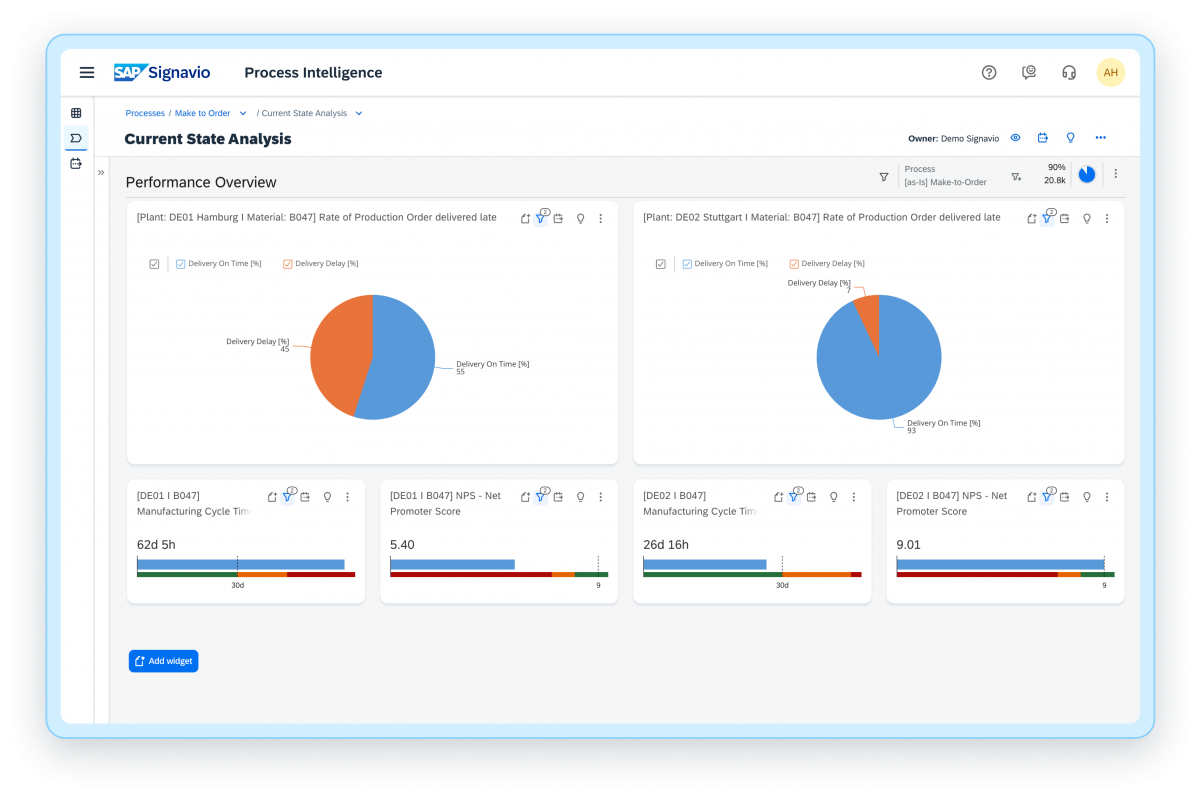
By locating and removing process bottlenecks and redundancies, SAP Signavio Process Transformation Suite has greatly improved our operational efficiency.
The software has been crucial in ensuring that our processes adhere to industry norms and regulations while lowering the risks associated with compliance.
Real-time collaboration capabilities in SAP Signavio Process Transformation Suite have accelerated cross-functional communication, facilitating quicker decision-making and more successful process upgrades.