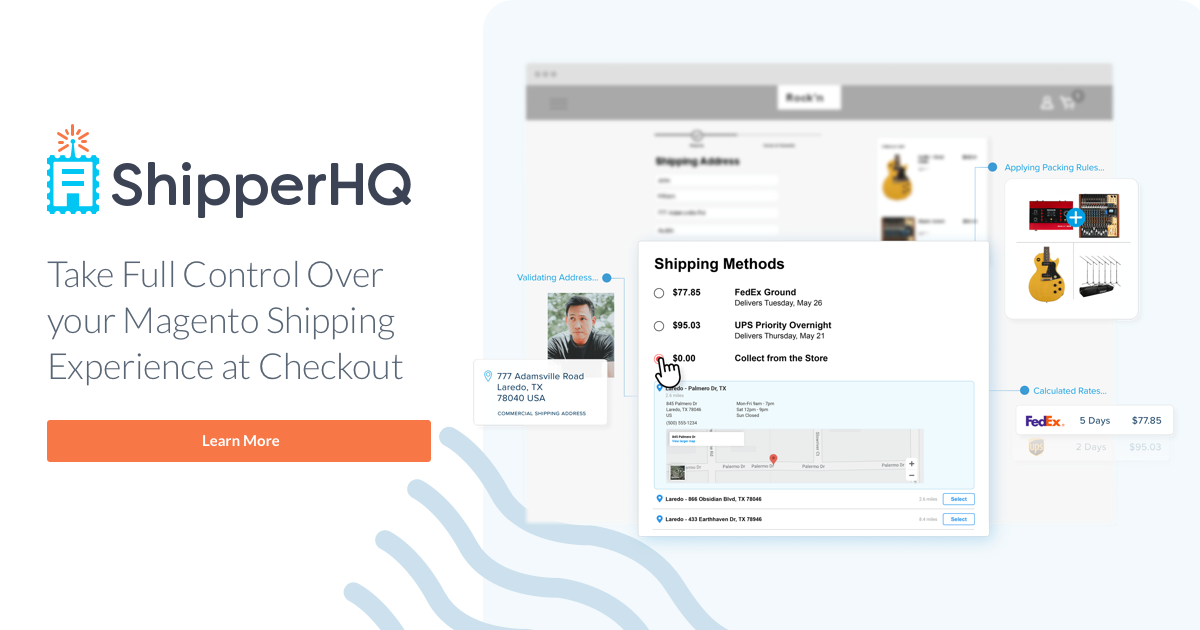
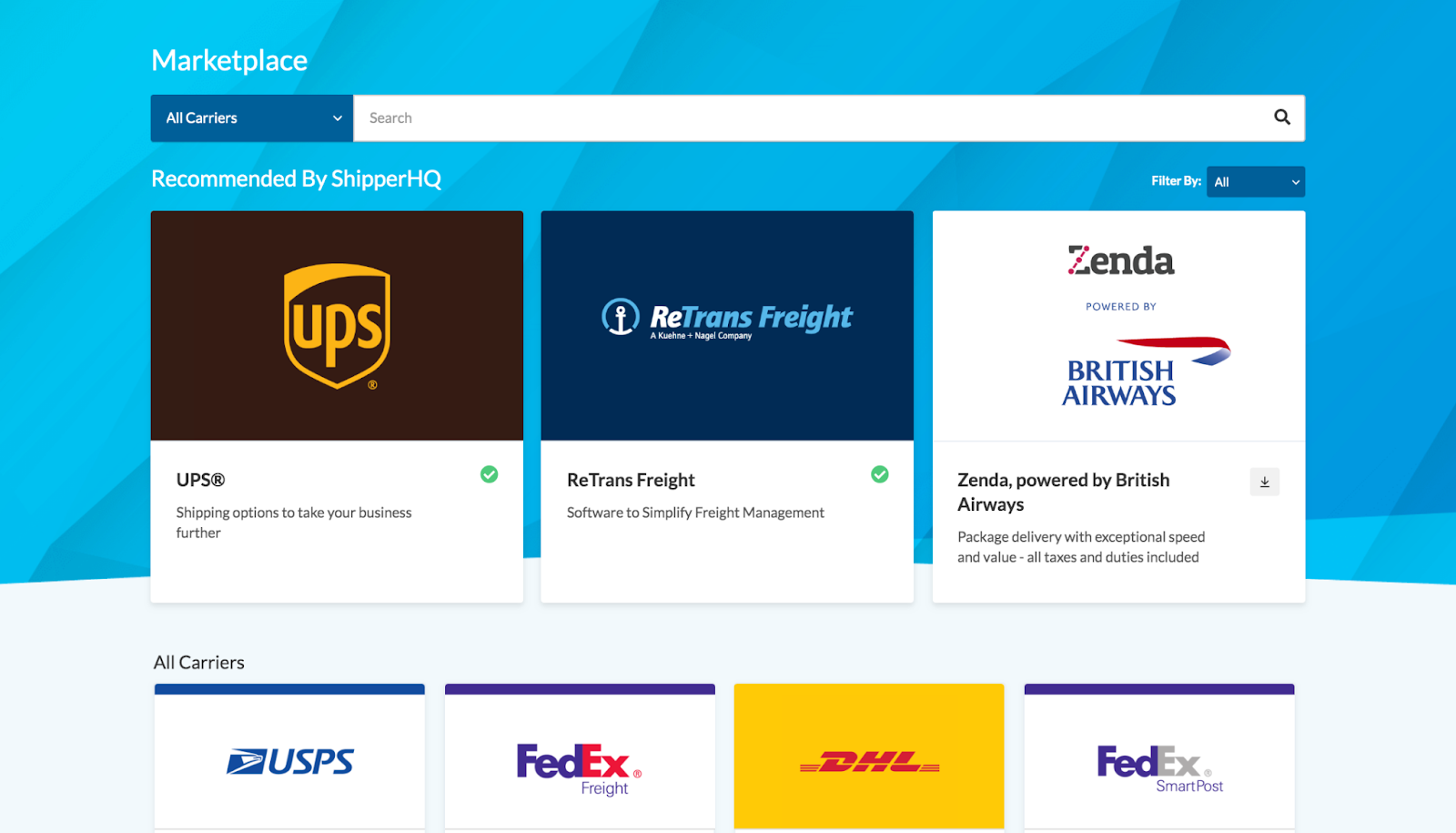
ShipperHQ is designed to streamline the shipping process for eCommerce businesses. This platform gives eCommerce businesses the power to set their own shipping rates and delivery options.
N/A
Spryker Cloud Commerce OS
Score 6.4 out of 10
N/A
Spryker Cloud Commerce OS is a modular Commerce System that enables B2B, B2C, and Marketplace business models through any customer interface, touchpoint, and device. Boasting extensibility, best-in-class performance, and fast time-to-market, the vendor states Spryker is trusted by brands such as TOYOTA, HILTI, and TomTailor. The Spryker Cloud Commerce OS NOW version has been specifically developed for manufacturers and brands who want to reach customers directly online.
Pricing is based on the duration and terms of your contract with the vendor. This entitles you to a specified quantity of use for the contract duration. If you choose not to renew or replace your contract before it ends, access to these entitlements will expire.
More Pricing Information
Community Pulse
ShipperHQ
Spryker Cloud Commerce OS
Considered Both Products
ShipperHQ
Verified User
Anonymous
Chose ShipperHQ
We only used BigCommerce's native real-time quote generator before this and it was only for international rates. ShipperHQ was able to help us get quickly set up with real-time rates for all FedEx services. I haven't looked into any alternatives.
USPS only allows you to use their services (obviously). It was sluggish and often offline. The shipsaver insurance saves us money. We had to guess shipping costs for items instead of entering their weights and sizes ahead of time. It integrates with our e-commerce site. Glad we …
Honestly, we have not had to use any alternative software to provide live shipping rates, so I do not have any experience with other products to compare it to. ShipperHQ was included with our BigCommerce Enterprise package, and we have been using them ever since without issue. …
Spryker Cloud Commerce OS appealed to us because they have open code, the licensing model was better compared to most vendors, and you have a high degree of developer freedom. The approach of composable commerce is good to integrate it into existing infrastructure, which is …
If you compare Spryker with commerce solutions on the market, you will notice that the focus is not on the front end. Spryker assumes that the store is only one of many possible channels through which customers order today and in the future. To understand the differences, one …
Spryker as a PaaS solution allows individualization on code and project level. Developers enjoy working with Spryker due to its modular structure as it is easy to learn, code and customize.
It was mostly the fit for purpose for a proof of concept and the wide variety of out-of-the-box functionality that was convincing. As a platform itself, many aspects were very similar across the different platforms.
Spryker is a PHP and open-source stack-based solution, it's more a component framework, and not a traditional software product. You build your own custom solution based on best practices.
There is Hybris and salesforce which I was thinking to choose as an opportunity. The selection goes to Spryker Cloud Commerce OS, cause it brings in all the most value for us as an agency and much more for our customers. All in all, Spryker Cloud Commerce OS has everything that …
Spryker offers the customizability of Symfony but adds predeveloped features and an infrastructure that is more suited for e-commerce projects. Because of it's structure and used patterns the code can be understood between multiple developers and even different companies that …
Spryker is more advanced and allow more customization. The storefront is already fast in Spryker default implementation without any special settings. Spryker Commerce OS also fit better with complex business requirements and have a clearer approach to connect with third-party …
We worked with other Shop-Solution frameworks like shopify, shopware or woo-commerce, and similar. The way how Spryker Cloud Commerce OS was built - namely from the technical pov first - is probably the biggest argument why we are working with it for our enterprise level …
We integrating different ecommerce systems for our customers, but as I hear - Spryker has the most flexibility and most professional tech stack. They have a good focus on performance.
We like ShipperHQ for what it is which is-- more or less a live shipping rate calculator. It works well in our BigCommerce platform. But unfortunately, it lacks the shipping management ability to print labels and manage shipments and orders. This makes us have to use a third-party shipping app. This isn't the end of the world, but it would be much easier if we could just do it all from one place.
Spryker is very well suited (B2C and/or B2B) for big companies with complex and individual business models or also if your company needs a certain level of customization. Very good fit, if you need a scalable system. It is rather not the perfect fit for small companies or companies with very basic E-Commerce needs.
ShipperHQ makes providing live shipping rates fairly easy.
It also integrates pretty seamlessly into our BigCommerce platform.
It requires little to no maintenance. There are other third-party apps that we've used that require constant supervision, but ShippHQ is a set it and forget type app.
Extendable - you can extend the core functionalities to every business need.
Scalable - the technical implementation supports a highly scalable system approach.
Adjustable - besides implementing new functionalities the core functionalities can be adjusted to the business needs.
Up-to-date - compared to other E-Business solutions, the technological foundation of Spryker is growing, with the technological development and implementations [which] are kept up-to-date with quarterly releases.
I give ShipperHQ a 10/10 because the software does exactly what it says, and has a rock-solid support team to help get everything set up. The features are pretty easy to use and implement.
I'm not giving a 10/10 because I did need a little hand-holding to get through the initial setup. Overall, it's not that difficult to use once you understand how to apply custom dimensional rules.
Spryker's usability depends a lot on custom development. Therefore, I would like not to consider usability as something that comes with Spryker Cloud Commerce OS. Spryker Cloud Commerce OS; however, brings all the tools needed to design a solution with great usability.
Support suffered from Spryker Cloud Commerce OS's rapid growth. Contacts, department heads, and support systems changed frequently. Support processes as well as documentation are rather poor. One notices that they are putting more effort into the customers recently, but in the course of growth, there is still a lack of focus here. As a customer, I would like to see growth at a slower pace and a phase of stabilization.
USPS only allows you to use their services (obviously). It was sluggish and often offline. The shipsaver insurance saves us money. We had to guess shipping costs for items instead of entering their weights and sizes ahead of time. It integrates with our e-commerce site. Glad we have it now.
If you compare Spryker with commerce solutions on the market, you will notice that the focus is not on the front end. Spryker assumes that the store is only one of many possible channels through which customers order today and in the future. To understand the differences, one must therefore take a look at Spryker's architecture. This is divided into the Spryker [Cloud] Commerce OS (the backend with all process-related components), the front-end modules for B2C and B2B, as well as the integration modules (middleware) and interfaces (Glue API).
Time-To-Market: With Spryker you can run MVPs in less time and you can test new functionality with certain groups of users.
Due to its speed it is very likely to have reoccurring customer because of a very good customer experience.
With Spryker our customers increased their revenue especially in times of Corona where orders doubled and Spryker was able to cope with the load with no substantial increase in server power.