TrustRadius: an HG Insights company

Kibo eCommerce

Score8 out of 10

11 Reviews and Ratings

What is Kibo eCommerce?

Kibo Software offers Kibo eCommerce (formerly Mozu), designed to support retailers with online offer creation and deployment, content publishing and landing pages, and many tools and widgets out of the box with a retail-oriented ecommerce solution. Mozu was acquired by Kibo Software from Volusion in October 2016.

Categories & Use Cases

Media

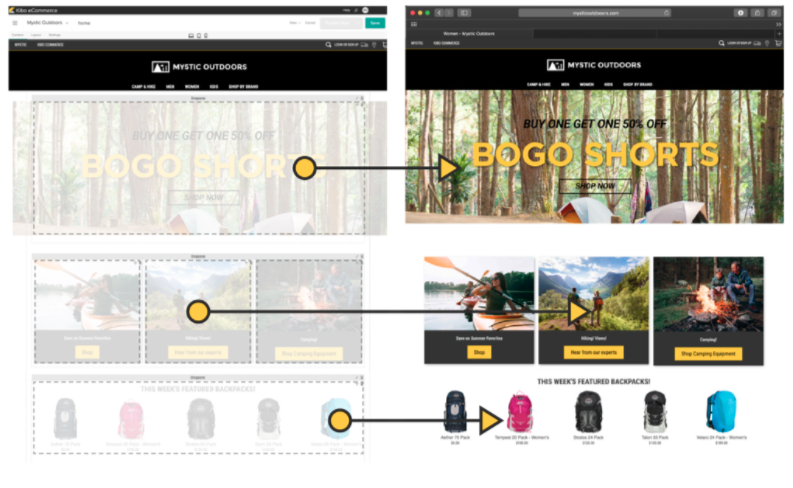
User Friendly Tooling:
Empower non-technical teams to manage the look & feel of the digital storefront with drag-&-drop functionality, preview environments, & intuitive content management tools.
Mobile-First Architecture:
Deliver consistent online experiences with natively responsive sites on a single code base

1 / 2

Top Performing Features

  • Checkout user experience

    Easy for customers to view shopping cart and checkout; maintains a consistent, trusted look & feel.

    Category average: 7.9

  • Order processing

    Includes tools or integrations for order processing.

    Category average: 8.2

  • Inventory management

    Includes tools or integrations for managing inventory.

    Category average: 7.7

Areas for Improvement

  • Bulk product upload

    Admins can upload products in bulk using spreadsheets.

    Category average: 7.5

  • SEO

    The platform & templates help users create the right website infrastructure (pagination, page headers, titles, meta tags, url structure, etc.) to increase the site’s visibility in search engine results.

    Category average: 7.6

  • Custom functionality

    Users are able to customize the functionality of their eCommerce operation with custom code or add-ons.

    Category average: 7.9

From Mozu to Kibo: A Build-Your-Own Adventure

Use Cases and Deployment Scope

We use the Kibo eCommerce platform - formerly Mozu - to power our two DTC websites and two B2B websites, along with several international content sites and web-based tools for partners, both domestic and international. We have used the inherent flexibility of the platform to support our particular business rules and use-cases.

Pros

  • API-first architecture
  • Flexibility around roll-your-own business logic
  • Promotions engine handles our needs.
  • OOTB integrations are plentiful.

Cons

  • Documentation can be old.
  • API documentation needs to include sample code, specifying required data/fields.
  • Tier-1 support is slow to review tickets and can't help with technical issues.

Return on Investment

  • We've been able to scale out and up much quicker than we were able to do with our custom, in-house solution.

Other Software Used

Attentive Mobile, Bronto Marketing Platform, Pepperjam Ascend

Kibo - a great start to our eCommerce journey!

Use Cases and Deployment Scope

Our company is relatively new to the eCommerce world and

Kibo has been an outstanding partner in building a highly effective solution. We are now successfully operating

a basic BOPIS business on two separate company websites, with unique store locations

and product assortments. The

functionality and flexibility we have with the Kibo platform has been instrumental in managing our current business model, as well as planning future expansion

efforts.

Pros

  • Detailed Business Reporting
  • Strong Promotional Discount Functionality
  • Easy to use Marketing Tools

Cons

  • Easier to use Product Recommendation functionality

Return on Investment

  • We are in the very early days of eCommerce and initial results are encouraging.

If I could start over and do it all over again... I would still choose Kibo!

Use Cases and Deployment Scope

We are migrating off Magento and over to Kibo eCommerce to help manage our B2B digital functionality. We had 3 major concerns that led us to Kibo... the overly complicated pricing structure, an ERP that does not have prebuilt integrations, and a fairly unique distributed inventory model. Kibo eCommerce was able to manage each of these with out of the box functionality.

Pros

  • Complicated Pricing structures
  • Buy online Pick Up In-Store with transfer capabilities
  • Customer Service
  • Microservices / API Intergrations

Cons

  • Prebuilt Integration - There is not currently a large number of preexisting integrations, but custom integrations are fairly quick
  • Time to Deploy - Don't get me wrong, We have deployed in the timeline we expected, but if you are trying to get something off the ground fast, Kibo might not be right for you. It is a robust platform that take some time to get up and running.
  • Complicated Shipping - if you have a complicated shipped process, you might want to look for a tool to help, Kibo does not have very robust out of the box shipping capabilities.

Return on Investment

  • When we launch in the coming months we will be able to serve 100% of our customer using a digital tool.
  • 90% of our digital needs were out of the box functionality in Kibo
  • Only problem we have had was around Manufacturer surcharges, which was not part of our 2019 roadmap...Thanks 2020! I hate surcharges...

Alternatives Considered

Shopify Plus, Salesforce Commerce Cloud, Adobe Commerce (Magento Commerce), Optimizely B2B Commerce Cloud and Optimizely Commerce Cloud

Reliable & Trusted eCommerce Partner

Use Cases and Deployment Scope

We use Kibo for our eCommerce platform. The company and partner network has been excellent at supporting our needs, and our relationship has been very healthy for many years. They have continued to add valuable services like Personalization and Order Management to help our business grow and thrive.

Pros

  • eCommerce
  • Personalization
  • Support
  • Value

Cons

  • Transparency
  • Timeliness
  • Cost

Return on Investment

  • Kibo has always delivered rapid & exceptional support to our organization
  • Kibo has been cost-competitive when considering other vendors
  • The platform continues to add value without requiring substantial additional investments

Alternatives Considered

Shopify, Adobe Commerce (Magento Commerce), Squarespace and BigCommerce

Run away from Mozu

Pros

  • Mozu offers a flexible multi site setup where you can feed multiple sites from the same product and order database.
  • Mozu allows you to create as many attributes as you would like across customer, orders, and products. This flexibility can be really powerful.

Cons

  • Mozu is riddled with bugs. It feels like you are using beta software. Simple things just don't work. Mozu support has done a poor job of addressing these issues. We have had open bugs for over a year.
  • Mozu has a very limited number of integrations. Those tools that are integrated are done very poorly. When these issues have been brought to Mozu's attention they have ignored them.
  • The Mozu user interface for admin users is very poor. Even after a major redesign it is still not responsive. It is hard to see what you are doing due to poor font and color choices. Mozu is aware of these issues and refuses to fix them.
  • Mozu management doesn't care about clients.
  • Mozu is not SEO friendly. It does not follow SEO best practices.
  • The Mozu support team is not empowered to solve problems. 99% of support requests can not be resolved on the first call.
  • Mozu development is complicated and expensive. Developers will need training which Mozu charges for.
  • Data migration for products is exceeding difficult. Order data can not be migrated at all.

Return on Investment

  • We have seen a drop in traffic since switching to Mozu.
  • We have seen a drop in sales since switching to Mozu.
  • We have had an increase in employee time spent trying to get their jobs done.

Alternatives Considered

Volusion