TrustRadius: an HG Insights company

NGINX

Score9.2 out of 10

140 Reviews and Ratings

What is NGINX?

NGINX, a business unit of F5 Networks, powers over 65% of the world's busiest websites and web applications. NGINX started out as an open source web server and reverse proxy, built to be faster and more efficient than Apache. Over the years, NGINX has built a suite of infrastructure software products o tackle some of the biggest challenges in managing high-transaction applications.

Read more details.

Media

Screenshot of Overview of the NGINX Application Platform
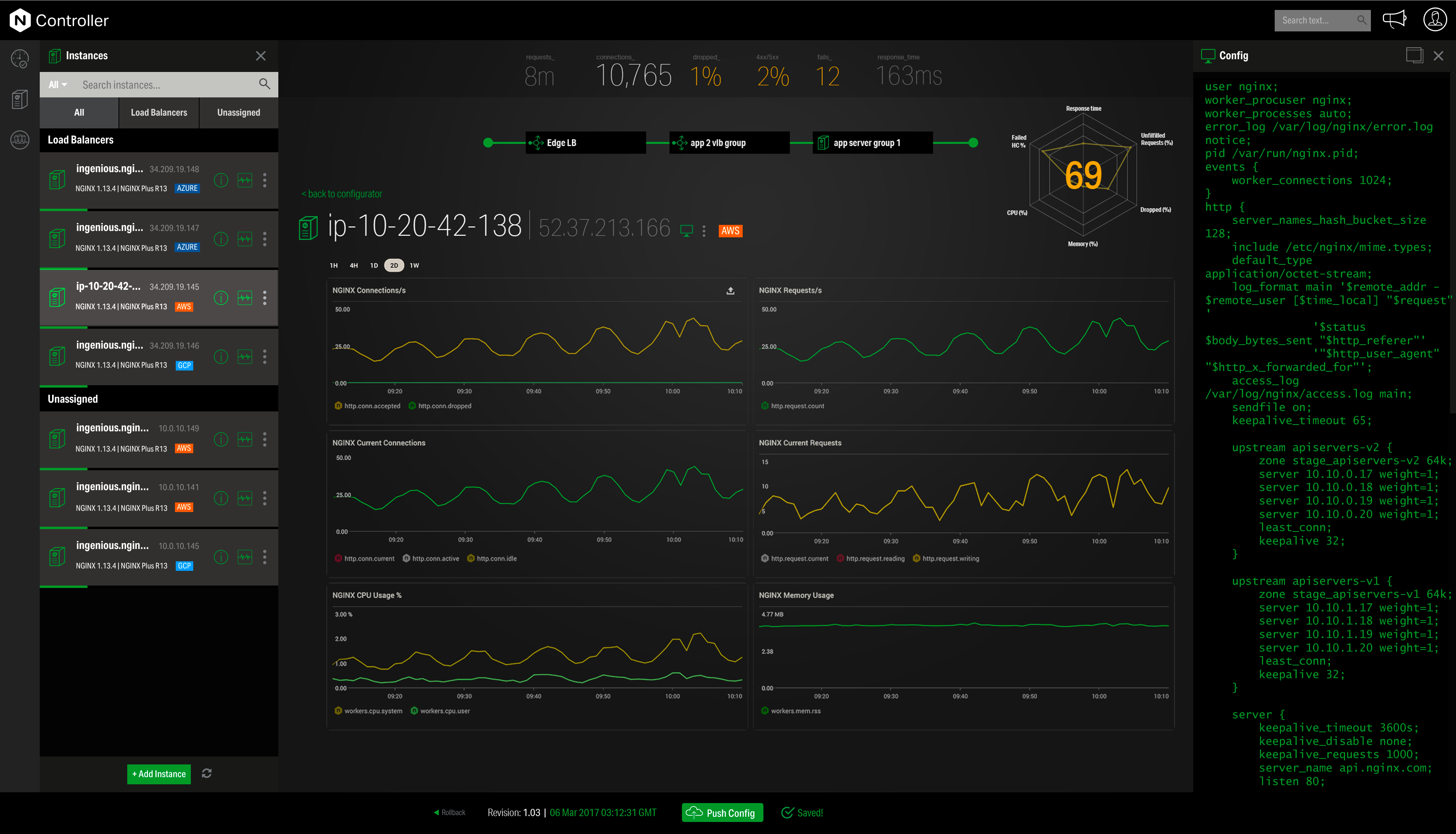
Screenshot of NGINX Controller - Monitoring
Screenshot of NGINX Controller - Configuration

1 / 3

Screenshot of Overview of the NGINX Application Platform

Top Performing Features

  • Installation

    Ease of download and installation

    Category average: 8.5

  • Security management

    Integrated security management for applications

    Category average: 8.3

  • Application server performance

    Speed of deploy time, initialization time and other performance metrics

    Category average: 8.3

Areas for Improvement

  • IDE support

    Support for a number of different programming environments or IDEs

    Category average: 7.3

  • Administration and management

    Ease of management via administration console

    Category average: 7.7

  • Open-source standards compliance

    Support for open-source standards like J2EE

    Category average: 7.9

Great NGINX ehh

Use Cases and Deployment Scope

NGINX is a great product. best of class, easy to learn,deploy and use.

Pros

  • high performance
  • low resource usuage
  • efficient static file serving

Cons

  • to be more scale-able
  • to use lesser resource

Return on Investment

  • positive ROI - easy to deploy
  • positive ROI - easy to use

Usability

Other Software Used

NGINX Plus

My review

Use Cases and Deployment Scope

Lightweight web server

Pros

  • Load balancing
  • Web servers
  • Proxy

Usability

NGINX

Use Cases and Deployment Scope

We use NGINX as a reverse proxy and load balancer in our enterprise architecture. We also use it to help improve website security in conjunction with Shape.

Pros

  • Load balancing
  • Improved security
  • Scalability

Cons

  • Relative complexity when configuring X-Cigna-True-client-IP
  • Code in a branch can be overwritten by the next comit
  • Creating a template to support routing to Shape was difficult due to complexity of architecture patterns

Usability

Solution for Reverse Proxy

Use Cases and Deployment Scope

We use as a Reverse Proxy

Pros

  • Reverse Proxy
  • SSL
  • Caching
  • CIPHERS

Cons

  • Should implement in Windows
  • Web Interface

Return on Investment

  • Easy to explain to client

Alternatives Considered

NGINX Plus

Other Software Used

NGINX Plus

NGINX Forward Proxy is the way to go!

Use Cases and Deployment Scope

We use the NGINX forward proxy manager to manage a few sites coming into the network. all websites with different domains.

Pros

  • reading TCP headers for forwarding
  • forwarding traffic flawlessly
  • Let's Encrypt compatibility

Cons

  • add load balancer into basic proxy manager
  • better initial SSL documentation

Return on Investment

  • we haven't made moves to do a spend so no ROI needs yet
  • we are worried about the neglect of SMB segemnt perhaps.. smaller dollars

Other Software Used

F5 BIG-IP