Chose Asana
Look and feel of monday.com is better, but Asana has more features and capabilities making it the better option.

| Product | Rating | Most Used By | Product Summary | Starting Price |
|---|---|---|---|---|
 Asana | N/A | Asana is a web and mobile project management app. With tasks, projects, conversations, and dashboards, Asana lets an entire team know who's doing what by when, enabling workload balancing. Users can also add integrations for GANTT charts, time tracking and more. | $13.49 per month per user | |
 monday.com | Mid-Size Companies (51-1,000 employees) | monday.com Work OS is an open platform designed so that anyone can create the tools they need to run all aspects of their work. It includes ready-made templates or the ability to customize any work solution ranging from sales pipelines to marketing campaigns, CRMs, and project tracking. | $12 per month per user |
| Asana | monday.com | |||||||||||||||
|---|---|---|---|---|---|---|---|---|---|---|---|---|---|---|---|---|
| Editions & Modules |
|
| ||||||||||||||
| Offerings |
| |||||||||||||||
| Entry-level Setup Fee | Optional | No setup fee | ||||||||||||||
| Additional Details | A discount is offered for annual billing. | Yearly plan: Save 18% Monthly plan also available | ||||||||||||||
| More Pricing Information | ||||||||||||||||
| Asana | monday.com | |
|---|---|---|
| Considered Both Products |  Asana  Brian Keary Owner and CEO Chose Asana Side by side with the other two Asana by far beats monday.com and is comparable and slightly better than ClickUp. Monday is completely browser-based and is hard to navigate and figure out how to set up. Asana and ClickUp are the exact opposite. Both are easy to set up and …  Michael Anderson Audio Engineer/ Editor Chose Asana Asana is simpler and easier to manage than Teamwork Projects and Wrike for smaller teams, but still offers more features than Basecamp and requires a lot less customization than monday.com.  Rafiqul Islam Full-stack Software Engineer Chose Asana Asana is a top-tier project management software that helps us organize and track projects from start to finish. It allows us to apply tasks/to-dos to multiple projects without duplication, divide complex projects into smaller tasks, and track project progress. It also helps us …  Chantelle Chase Brand Development & Culture Specialist Chose Asana I like how extensive the capabilities are for Asana. With other softwares it seems there are many things lacking. I feel like Asana is also a very user friendly platform and aesthetically pleasing which is important in a modern office. We have many young people entering our …  Pankaj Singh Shah Marketing Automation Specialist Chose Asana Just because of improved UI. Rest features are same for us. We used basic features.  Ben Flemming Director of Human Resources Chose Asana Asana hit our sweet spot of easy to try, appropriate pricing for our mid size non-profit team, flexibility, and features. Lots of other platforms have very similar features organized in other ways, but Asana made sense and was fun to work with right off the bat. there were …  JATIN GUPTA Assistant Professor Chose Asana Asana stack over its various major competitors as its costing is quite under budget. The support to user is 24 x 7 and call centers available. The mail reply within 24 hours. Apart from it its user community is quite big and helps in the system to grow. It is widely accepted in …  Kirk Brote Senior Director of Product Experience Chose Asana There were a combination of factors that led us to decide on Asana, including ease of use and external system integrations, but primarily we could use it across geographically distributed offices successfully and incorporate a variety of end user work flows based on global …  Kelly Reumann Lead Graphic Design Specialist/ Social Media Marketer Chose Asana Asana and Monday are similar in that they are both task tracking softwares however I feel that Asana is a bit too simple for our team as opposed to Monday. Asana is great for a small to medium sized team, we are looking for a software that we can use across multiple departments … |  monday.com  Brandon Stokes Customer Operations Enablement Manager Chose monday.com  João Luís Dias Account Manager Chose monday.com  Parker O'Very Marketing Operations Chose monday.com Smartsheet does more than we needed it to do for our simple project management. JIRA is the same way. Asana and Trello are probably the closest comparisons for our needs. Both of these others are great, and I don't have any real complaints to compare on any of these. Monday.com …  Anson Abraham Data Czar Chose monday.com  Nichole Pelaez Founder+CEO Chose monday.com overall, the diverse views and customization put monday.com ahead of the other platforms because its tailored for each individual. Asana is a great to do list platform, but lacks features that are needed to manage a project. click up is a great free platform, but lacks the …  Giovanni Jurado Business Analyst Team Lead Chose monday.com monday.com offer much of the standard tools and seems to be ever evolving. They seem to take feedback and constantly upgrade the tools. If all the tools are there, the differentiating factor might be the cost, any integrations you may need, and the visual "chemistry". To me, …  Juliana Galluccio Gerente de Projetos Chose monday.com Is far away the best!! With monday.com I find everything I need easily. As I said before, its user-friendly interface, which is intuitive and easy to navigate.  Josh Edney Executive Pastor Chose monday.com Although monday.com costs more than the other services, it can handle more as a platform. The functions, features, integrations, and automations allow you to do so much more than, than just keeping track of project & task deadlines. Chose monday.com Simpler, nicer, and more consolidated. Everything is in one place.  Adam Montgomery Energy Efficiency Consultant Chose monday.com Basecamp has some very nice project management features but Monday.com really focuses on task management and keeping teams accountable/organized. We fell in love with the visual task boards that Monday.com offers and that's why we chose to go with it. We also really enjoyed …  Sierra Schubach Marketing Content Manager Chose monday.com Monday.com has a lot of functionality and visibility that the other tech we've used did not. the notifications and ease of adding new tasks and projects are also better than the other tech we have used.  Hernán Silva Web designer Chose monday.com monday.com includes the basic features from most project management apps: task management, collaboration, boards, messaging and so on. Also, the app excels in making multiple technical tools available in a single app, like Gantt, Kanban, and task management. Where you cannot … |
| Asana | monday.com | |||||||||||||||||||||||||||||||||||||||||||||
|---|---|---|---|---|---|---|---|---|---|---|---|---|---|---|---|---|---|---|---|---|---|---|---|---|---|---|---|---|---|---|---|---|---|---|---|---|---|---|---|---|---|---|---|---|---|---|
| Project Management |
| |||||||||||||||||||||||||||||||||||||||||||||
| Professional Services Automation |
|
| Asana | monday.com | |
|---|---|---|
| Small Businesses |  Stackby Score 9.0 out of 10 | Stackby Score 9.0 out of 10 |
| Medium-sized Companies |  InEight Score 8.3 out of 10 | InEight Score 8.3 out of 10 |
| Enterprises | InEight Score 8.3 out of 10 | InEight Score 8.3 out of 10 |
| All Alternatives | View all alternatives | View all alternatives |
| Asana | monday.com | |
|---|---|---|
| Likelihood to Recommend | 8.4 (0 ratings) | 9.1 (0 ratings) |
| Likelihood to Renew | 9.6 (0 ratings) | 9.0 (0 ratings) |
| Usability | 7.9 (0 ratings) | 8.7 (0 ratings) |
| Availability | 8.4 (0 ratings) | 8.2 (0 ratings) |
| Performance | - (0 ratings) | 8.6 (0 ratings) |
| Support Rating | 5.0 (0 ratings) | 9.5 (0 ratings) |
| In-Person Training | - (0 ratings) | 9.1 (0 ratings) |
| Online Training | - (0 ratings) | 9.1 (0 ratings) |
| Implementation Rating | - (0 ratings) | 9.1 (0 ratings) |
| Configurability | - (0 ratings) | 8.2 (0 ratings) |
| Ease of integration | - (0 ratings) | 9.0 (0 ratings) |
| Product Scalability | 8.2 (0 ratings) | 6.9 (0 ratings) |
| Vendor post-sale | - (0 ratings) | 9.0 (0 ratings) |
| Vendor pre-sale | - (0 ratings) | 9.0 (0 ratings) |
| Asana | monday.com | |
|---|---|---|
| Likelihood to Recommend |
 Marina Torttoli Marketing Director |
|
| Pros |
|
 Joshua Rodriguez Digital Strategy Manager |
| Cons |
|
|
| Likelihood to Renew |
|
|
| Usability |
|
 Jessica Johnson Content Marketing Manager |
| Reliability and Availability |
 Ronen Soreq Project Manager |
|
| Performance | No answers on this topic |
|
| Support Rating |
 Adam Lumley Director of Marketing & Communications |
|
| Online Training | No answers on this topic |
|
| Implementation Rating | No answers on this topic |
 Joseph Madere Learning Management System Analyst -- CornerstoneOnDemand |
| Alternatives Considered |
Rafiqul Islam Full-stack Software Engineer |
|
| Scalability |
Ronen Soreq Project Manager |
|
| Return on Investment |
 Ammar Aboalrub Freelancer |
Brandon Stokes Customer Operations Enablement Manager |
| ScreenShots | Asana Screenshots 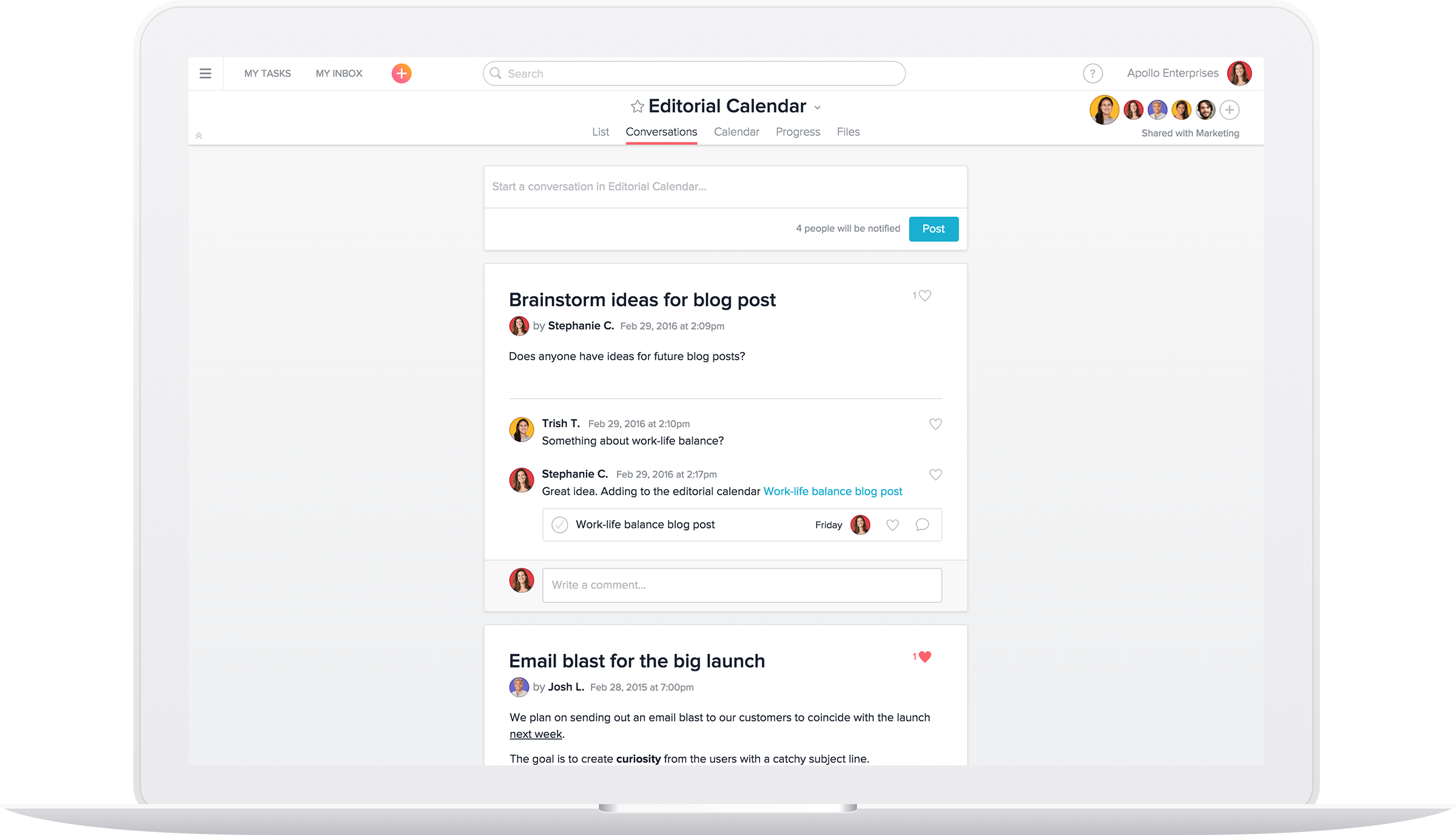     | monday.com Screenshots 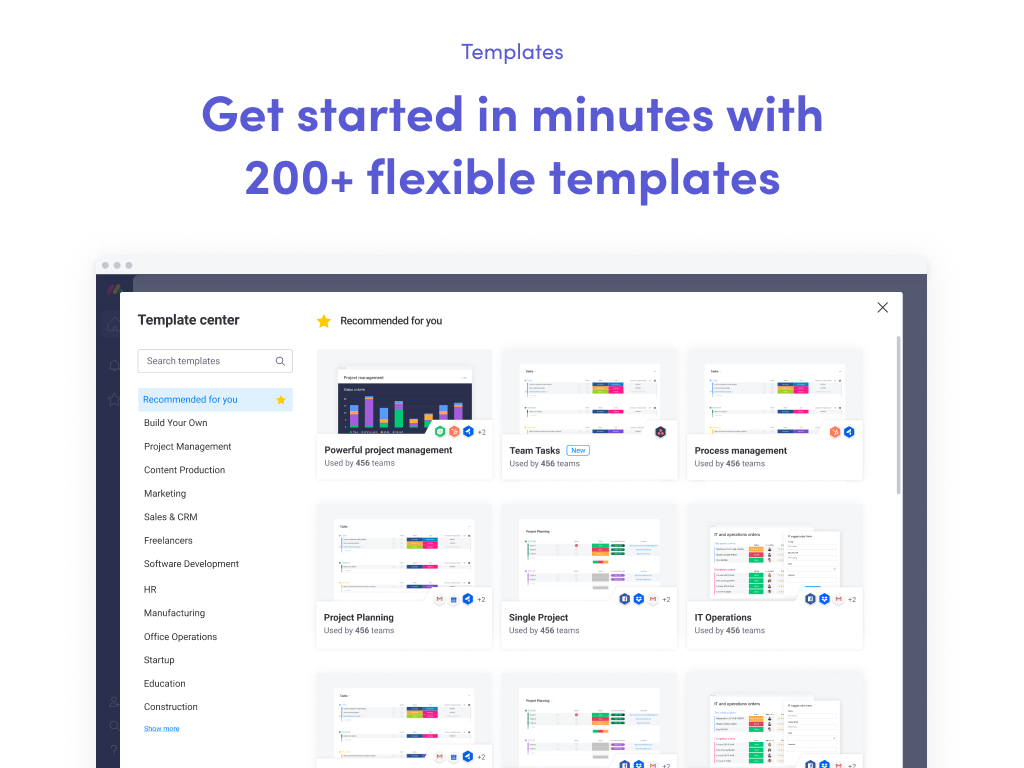     |
